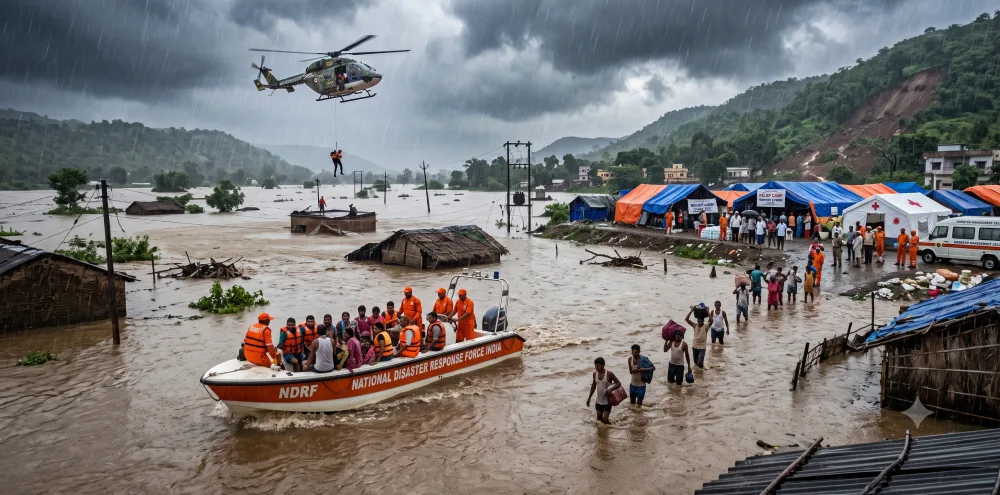
The Indian subcontinent is once again grappling with the formidable power of its annual monsoon, bringing both life-sustaining rains and devastating floods. This season, **India’s Monsoon Challenges** have been particularly acute, marked by severe weather events across numerous states. Heavy rainfall, flash floods, and dangerous landslides have disrupted daily life, caused significant damage, and tragically led to loss of life. From the southern hills of Wayanad to the northern plains of Uttar Pradesh and the bustling capital of Delhi, the monsoon’s fury underscores a critical need for robust disaster preparedness and long-term climate resilience strategies. This article delves into the current monsoon situation, its profound impacts, and the ongoing efforts to mitigate its destructive force, while also exploring the broader implications for the nation’s infrastructure and communities.
The Unrelenting Monsoon Fury Across States
The current monsoon season has unleashed its full force across India, creating a complex web of environmental and humanitarian crises. Reports from various regions paint a grim picture of widespread disruption and devastation. Consequently, authorities remain on high alert, continuously monitoring weather patterns and deploying emergency services. This extensive impact highlights the severe nature of this year’s weather events.
In Wayanad, a picturesque district in Kerala, a tragic landslide claimed several lives, pushing the toll to seven. Rescue operations in the hilly terrain are incredibly challenging. Furthermore, heavy rains continue to hamper efforts, making access difficult for emergency responders. Local communities have united, working alongside official teams to search for survivors and provide aid. The aftermath leaves a community in mourning, grappling with lost homes and livelihoods.
Further north, Shimla, the popular hill station in Himachal Pradesh, has also experienced heavy and incessant rainfall. This deluge has led to widespread waterlogging and posed significant threats to its fragile infrastructure. Roads have become treacherous, increasing the risk of accidents. Additionally, local authorities have issued advisories, urging residents and tourists to exercise extreme caution. The tourism sector, a cornerstone of Shimla’s economy, faces considerable setbacks due to the persistent inclement weather.
The national capital region has not been spared. Delhi, along with Noida and Ghaziabad, found itself under a ‘yellow’ alert, signifying the likelihood of heavy rainfall. This forecast prompted local administrations to close schools, prioritizing the safety of students and staff. Commuters faced severe traffic congestion and waterlogged streets, disrupting daily routines across the bustling metropolitan area. Urban flooding remains a persistent problem in Delhi during the monsoon season, straining drainage systems.
Meanwhile, the situation is even more critical in other parts of the country. Uttarakhand, known for its mountainous terrain, has been placed under a red alert. This highest level of warning indicates an imminent threat of extremely heavy rainfall. Neighboring Uttar Pradesh and several other states have also received heavy rainfall warnings. These alerts underscore the potential for flash floods, riverine flooding, and further landslides. Therefore, rapid deployment of disaster response teams is crucial in these vulnerable regions. The monsoon fury has thus far claimed over ten lives in various rain-related incidents across the country.
Historical Context of Monsoon in India
The monsoon is not merely a seasonal weather phenomenon for India; it is the very lifeblood of the nation. Historically, the summer monsoon, occurring from June to September, accounts for approximately 70% of India’s annual rainfall. This immense volume of water is absolutely crucial for the agricultural sector, which employs a significant portion of the country’s population. Farmers eagerly await the monsoon’s arrival, as it dictates the success of their kharif (monsoon) crops like rice, pulses, and oilseeds.
For centuries, the rhythm of Indian life has been intricately linked to the monsoon’s arrival and intensity. Ancient texts and folklore often celebrated the life-giving rains. However, they also warned of its destructive potential. The variability of the monsoon, characterized by periods of abundant rain and stretches of drought, has always presented a challenge. Early societies developed complex water management systems, including stepwells and reservoirs, to harness its bounty and mitigate its extremes. This ingenuity showcases a long-standing understanding of monsoon dynamics.
In recent decades, however, the monsoon’s behavior appears to be shifting. Scientists and meteorologists point to climate change as a significant factor influencing these altered patterns. There is a growing trend of more intense, shorter bursts of rainfall, interspersed with longer dry spells. This shift leads to both increased flood risks and prolonged droughts, often within the same season or region. For example, a region might experience devastating floods followed quickly by water scarcity, creating a dual challenge for water management.
Furthermore, the predictability of the monsoon has diminished. Traditional forecasting methods are often challenged by these erratic shifts. This unpredictability makes it harder for farmers to plan their planting cycles. It also complicates disaster preparedness efforts. Consequently, understanding this historical context helps in appreciating the current environmental pressures. The current spell of intense rainfall and related incidents, therefore, must be viewed through this lens of changing climatic conditions and India’s enduring relationship with its monsoon. This deeper understanding is vital for crafting effective future strategies.
Socio-Economic Ramifications of Heavy Rainfall
The immediate and long-term socio-economic ramifications of heavy rainfall are profound, extending far beyond the initial destruction. These impacts touch nearly every aspect of life, from food security to public health. Consequently, the affected regions often face a prolonged period of recovery and reconstruction. This cascade of effects demands a comprehensive and coordinated response.
Agriculture, the backbone of India’s economy, is often the first and hardest hit. Excessive rainfall and flooding can completely destroy standing crops, leading to massive financial losses for farmers. Furthermore, waterlogging can damage soil fertility and delay subsequent planting seasons. This directly impacts food security, potentially leading to price increases for essential commodities. Additionally, the livelihoods of millions of small and marginal farmers become precarious, pushing many into deeper debt.
Infrastructure suffers immensely during periods of intense monsoon activity. Roads are washed away, bridges collapse, and railway lines are disrupted, severing vital transportation links. This hinders rescue operations and the delivery of essential supplies. Power outages become widespread as electricity poles and transformers are damaged, plunging areas into darkness. The cost of repairing and rebuilding this critical infrastructure runs into billions of rupees, diverting funds from other developmental projects. Moreover, communication networks are often compromised, isolating affected communities further.
Urban life faces significant disruption from heavy rains. Cities, with their often-inadequate drainage systems, quickly succumb to waterlogging. This brings traffic to a standstill, paralyzes public transport, and forces businesses to close. Beyond the immediate inconvenience, stagnant water becomes a breeding ground for disease-carrying mosquitoes and contaminates drinking water sources. Consequently, there is an increased risk of waterborne diseases like cholera, typhoid, and dengue. The public health system often struggles to cope with the surge in illness.
Furthermore, displacement and rehabilitation present enormous challenges. Thousands of people are forced to abandon their homes, seeking shelter in temporary relief camps. Providing adequate food, water, sanitation, and medical care for these displaced populations is a logistical nightmare. The psychological trauma of losing homes and livelihoods can linger for years, impacting mental health. Moreover, children’s education is often interrupted, with schools converted into relief centers. The cumulative effect of these challenges slows economic growth and exacerbates poverty in vulnerable communities.
Government Response and Disaster Management Strategies
In the face of relentless monsoon fury, governmental agencies at both central and state levels activate their comprehensive disaster management frameworks. The primary objective is to minimize loss of life, provide immediate relief, and facilitate speedy recovery. This concerted effort requires robust planning, effective communication, and swift execution. Consequently, a multi-agency approach is consistently employed.
The National Disaster Response Force (NDRF) and State Disaster Response Force (SDRF) are at the forefront of these operations. These highly trained teams specialize in search and rescue missions, often working in challenging conditions like landslides and floodwaters. They are equipped with specialized gear for water rescue, medical emergencies, and debris clearance. Furthermore, their rapid deployment to affected areas is crucial for saving lives. Their presence provides a critical lifeline to stranded populations.
Early warning systems play a pivotal role in proactive disaster management. Meteorological departments issue regular forecasts and alerts, including color-coded warnings like ‘yellow’ and ‘red’ alerts, to inform the public and guide administrative actions. These warnings allow for timely evacuation of vulnerable populations and pre-positioning of relief materials. However, challenges persist in effectively disseminating these warnings to remote areas and ensuring public adherence to evacuation orders. Public awareness campaigns are continuously conducted to educate communities on preparedness measures.
Coordination among various government departments, non-governmental organizations, and local communities is paramount. District administrations serve as the central coordination points, managing resources and directing relief efforts. They establish temporary relief camps, ensure the supply of food, clean water, and medicines, and oversee the distribution of essential aid. Furthermore, continuous damage assessments help in allocating resources efficiently. The logistical complexities are immense, often requiring military assistance for transportation and heavy equipment.
Preparedness measures extend beyond immediate response. Governments invest in long-term strategies like strengthening embankments along rivers, desilting canals, and improving urban drainage systems. These preventative measures aim to reduce the vulnerability of communities to future floods. Additionally, policies for resilient infrastructure development are being formulated to ensure that new constructions can withstand extreme weather events. The focus is increasingly shifting towards building a culture of preparedness. This proactive stance ensures that communities are better equipped to face future environmental challenges.
Addressing India’s Monsoon Challenges: Long-Term Solutions
Effectively addressing **India’s Monsoon Challenges** requires a comprehensive and multi-pronged approach that integrates immediate relief with long-term strategic planning. Mere reactive measures are insufficient to combat the escalating impacts of extreme weather events. Therefore, a proactive stance focused on climate resilience and sustainable development is essential for future security. This requires a paradigm shift in how monsoon risks are managed.
One critical aspect is climate change adaptation. India, being highly vulnerable to climate change impacts, must invest significantly in strategies that build resilience against more frequent and intense weather events. This includes developing climate-resilient infrastructure, such as elevated roads and flood-resistant buildings. Furthermore, promoting diversification of livelihoods in flood-prone areas can reduce economic dependence on vulnerable sectors. Engaging local communities in developing these adaptation strategies ensures their relevance and effectiveness.
Sustainable urban planning is another non-negotiable component. Rapid urbanization has often led to the encroachment on natural floodplains and wetlands, exacerbating urban flooding. Future city development must prioritize proper drainage systems, the restoration of natural water bodies, and the creation of green infrastructure like urban parks and permeable surfaces. These measures help to absorb excess rainwater naturally. Moreover, strict enforcement of building codes in disaster-prone areas is crucial. Smart city initiatives should integrate robust storm water management systems.
In rural areas, supporting farmers with climate-resilient agriculture practices is vital. This includes promoting drought-resistant crop varieties and adopting water-efficient irrigation techniques. Crop insurance schemes can provide a financial safety net against losses. Additionally, improving access to timely weather information and agricultural advisories empowers farmers to make informed decisions. Promoting agroforestry and watershed management can also help regulate water flow and prevent soil erosion. These measures safeguard rural livelihoods.
Technological integration offers powerful tools for better preparedness and response. Utilizing artificial intelligence (AI) and machine learning can enhance weather forecasting models, providing more accurate and localized predictions. Satellite imagery and drone technology can offer real-time monitoring of floodwaters and damaged areas, aiding in rescue operations and damage assessment. Furthermore, mobile-based early warning systems can deliver critical information directly to vulnerable populations. Investing in advanced hydrological models can improve river basin management.
Finally, inter-state cooperation is fundamental, especially in managing shared river basins. Many major rivers flow through multiple states, making a coordinated approach essential for flood control and water resource management. This includes joint planning for dam operations, reservoir management, and information sharing. Such collaborative frameworks can prevent localized decisions from inadvertently escalating risks elsewhere. Therefore, a holistic approach combining policy, technology, and community engagement is key to navigating India’s complex monsoon future. This integrated strategy is the best defense against impending environmental challenges.
The Human Element: Stories of Resilience and Vulnerability
Amidst the scientific data, policy discussions, and official responses, the human element of the monsoon’s impact remains central. Every statistic of lives lost or homes destroyed represents a deeply personal tragedy. The stories emanating from affected regions highlight both the profound vulnerability of communities and their extraordinary resilience. Understanding these human experiences is crucial for compassionate and effective disaster relief.
Lives lost to landslides, flash floods, or collapsing structures leave an irreplaceable void in families and communities. The suddenness of these events often gives little time for escape. For example, in Wayanad, families were torn apart by the earth’s sudden movement. Those who survive often carry the psychological trauma of witnessing destruction and loss. The emotional toll is immense, frequently leading to long-term mental health challenges. Providing psychosocial support to victims and survivors is as important as material aid.
Homes, which represent security and identity, are frequently destroyed, leaving families displaced and without shelter. The struggle to rebuild lives from scratch is arduous. Relief camps, while offering immediate refuge, can also present their own challenges, including overcrowding and hygiene concerns. Moreover, the loss of livelihoods, particularly for daily wage earners and small farmers, pushes many into deeper poverty. This economic vulnerability makes recovery a steep uphill battle.
However, amidst the despair, incredible stories of human resilience and solidarity emerge. Local communities often become the first responders, risking their own lives to rescue neighbors and strangers. Volunteers tirelessly distribute food, clothing, and medical supplies. These acts of kindness underscore the strong social fabric that binds people together in times of crisis. Neighbors share limited resources and offer emotional support to one another. Such collective action amplifies relief efforts and provides hope.
Furthermore, the monsoon reveals the inherent vulnerabilities of marginalized groups. Those living in makeshift homes, low-lying areas, or informal settlements are disproportionately affected. They often lack the resources to relocate or rebuild. Children, the elderly, and individuals with disabilities are also more susceptible during emergencies, requiring specialized assistance. Therefore, disaster management strategies must adopt an inclusive approach, ensuring that the needs of the most vulnerable are specifically addressed. Protecting these populations is a moral imperative.
Conclusion
The relentless monsoon season of the current year has profoundly underscored **India’s Monsoon Challenges**, revealing the country’s delicate balance with nature. Widespread heavy rainfall, devastating landslides, and urgent flood alerts across numerous states have highlighted critical vulnerabilities in infrastructure and communities. From the tragic events in Wayanad and the persistent deluges in Shimla to the ‘yellow’ alert in Delhi, the monsoon’s impact has been both geographically extensive and deeply impactful. These events serve as a stark reminder of the unpredictable and often destructive power of natural phenomena.
India’s inherent reliance on the monsoon for its agrarian economy contrasts sharply with its growing susceptibility to extreme weather events. The shifting patterns of rainfall, likely influenced by global climate change, demand a re-evaluation of long-standing approaches to disaster management. While governmental bodies like the NDRF and SDRF have demonstrated commendable efforts in rescue and relief, the scale of recent disruptions calls for intensified focus on proactive strategies. These strategies must encompass everything from improved early warning systems to climate-resilient infrastructure development.
Moving forward, the nation must embrace a multi-faceted approach. This strategy must seamlessly integrate robust governance, cutting-edge technology, and strong community participation. Investments in sustainable urban planning, eco-friendly rural practices, and advanced meteorological forecasting are no longer optional; they are essential for future security. Furthermore, fostering greater inter-state cooperation in water resource management will be crucial for mitigating cross-border impacts. By learning from each monsoon cycle, India can progressively build a more resilient society, better equipped to navigate the complexities of its evolving climate. The path ahead requires sustained commitment and collective action to transform vulnerability into strength.
For more real-time news updates and announcements, visit our homepage.