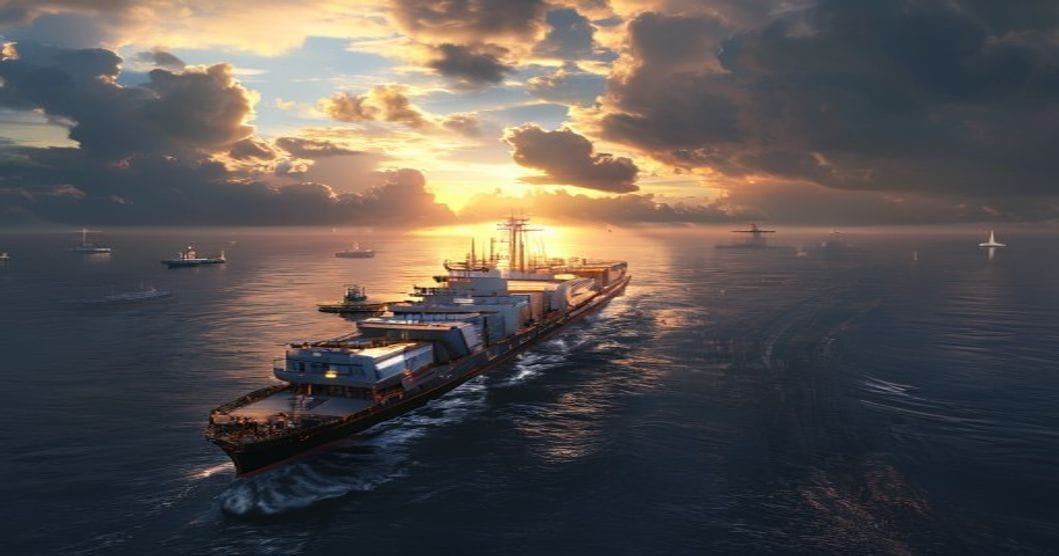
The geopolitical landscape of the Middle East consistently presents complex challenges. A significant new development has emerged concerning the vital Strait of Hormuz. Former US President Trump has unveiled a controversial plan, demanding a 20% fee on all cargo transiting this critical waterway. Additionally, the proposal includes a potential naval blockade aimed at Iran. This aggressive stance, termed Trump’s Hormuz Strategy, immediately escalates tensions in an already volatile region. Many experts are closely watching the situation.
This bold initiative seeks to impose a substantial financial burden on international shipping. It aims to finance the considerable costs of American military presence and protection in the Gulf. However, Iran swiftly rejected the demand. Its officials labeled the 20% fee as excessive and unfair. Furthermore, this move reintroduces the specter of a full-scale blockade, a tactic fraught with severe global economic and security implications. The world watches for the next steps.
The Enduring Significance of the Strait of Hormuz
The Strait of Hormuz is more than just a waterway; it is a global chokepoint of unparalleled strategic importance. This narrow passage connects the Persian Gulf with the Arabian Sea and the open ocean. Approximately one-fifth of the world’s total petroleum consumption, including a substantial portion of global liquefied natural gas (LNG), transits through this strait daily. Therefore, its uninterrupted flow is crucial for global energy security. Any disruption here sends shockwaves worldwide.
Geographically, the strait is only about 21 miles (34 kilometers) wide at its narrowest point. The shipping lanes are even narrower, making it vulnerable to blockades or attacks. For decades, global powers have recognized its critical role. It serves as the primary maritime route for oil exports from major Gulf producers, including Saudi Arabia, Iran, UAE, Kuwait, and Iraq. Consequently, the stability of this strait directly impacts international energy markets and economic stability across continents.
Historically, the Strait of Hormuz has been a flashpoint for regional and international tensions. Numerous naval incidents, including tanker wars in the 1980s and more recent skirmishes, underscore its precarious nature. The free passage of vessels through this international waterway is a fundamental principle of maritime law. However, Iran, with its long coastline along the strait, asserts significant control and views any external imposition as a threat to its sovereignty. This sets the stage for potential conflict.
A History of Acrimony: US-Iran Relations
The relationship between the United States and Iran has been deeply adversarial for decades. This history of mistrust and confrontation forms the backdrop for Trump’s Hormuz Strategy. Following the 1979 Iranian Revolution, diplomatic ties severed. Subsequent events, including the Iran-Iraq War and Iran’s nuclear program, further cemented this animosity. Tensions often simmered, occasionally boiling over into direct confrontations or proxy conflicts.
A significant turning point occurred with the 2015 Iran nuclear deal, formally known as the Joint Comprehensive Plan of Action (JCPOA). This agreement aimed to curb Iran’s nuclear ambitions in exchange for sanctions relief. However, the Trump administration withdrew from the JCPOA in 2018. This action reimposed crippling economic sanctions on Iran. The sanctions severely impacted Iran’s oil exports and its economy, leading to widespread hardship. Iran, in turn, began scaling back its commitments under the deal.
The withdrawal from the JCPOA initiated a cycle of escalating provocations. The US increased its military presence in the Gulf. Iran responded with various actions, including harassment of commercial shipping and missile attacks. One Indian sailor was tragically killed, and six others wounded, in Iranian missile strikes on oil tankers in the Strait of Hormuz, as reported by The Hindu. These incidents highlight the precarious security situation. Each side views the other’s actions as destabilizing. This creates a dangerous feedback loop of military posturing and rhetoric. This history is crucial context for understanding the current proposed plan.
The Specifics of Trump’s Hormuz Strategy: The 20% Cargo Fee
At the heart of the new plan lies the demand for a 20% fee on all cargo passing through the Strait of Hormuz. The rationale presented for this fee is straightforward: to reimburse the United States for the substantial costs incurred in protecting international shipping lanes in the Gulf. For many years, the US Navy has maintained a robust presence in the region. This presence deters piracy, ensures safe passage, and projects power. However, the US now seeks direct financial compensation for this security umbrella.
This proposed fee would impact every vessel traversing the strait, irrespective of its flag or cargo. Tankers carrying crude oil, LNG carriers, and container ships would all be subject to this charge. Consequently, the cost would inevitably be passed on to consumers globally, manifesting as higher fuel prices and increased costs for imported goods. The economic ripple effects could be significant, especially for energy-dependent nations in Asia and Europe. They would bear the brunt of these added expenses.
Furthermore, the legality of imposing such a fee on an international waterway is highly questionable under established maritime law. International conventions emphasize the freedom of navigation through straits used for international navigation. Unilaterally imposing a tariff could be seen as a violation of these principles. This raises immediate concerns from shipping organizations and international legal bodies. They fear setting a dangerous precedent for other strategic chokepoints worldwide. Such a move could invite retaliatory actions from other maritime powers. This forms a central challenge to Trump’s Hormuz Strategy.
The Blockade: A High-Stakes Deterrent
Beyond the fee, Trump’s Hormuz Strategy also includes the explicit threat of an Iran blockade. A naval blockade is an act of war under international law. It involves deploying naval forces to prevent ships from entering or leaving a port or coastline. In this context, a blockade of Iran would aim to completely cut off its maritime trade, thereby crippling its economy. This would also likely prevent any Iranian vessel from passing through the Strait, regardless of its cargo. The implications of such a move are far-reaching and deeply concerning.
The enforcement of a blockade would inevitably lead to direct confrontations between US and Iranian naval forces. Iran views the Strait as its territorial waters and a matter of national security. Any attempt to restrict its access would be met with fierce resistance. This was evident in previous incidents where Iran threatened to close the Strait in response to sanctions. Such a scenario could quickly escalate into a full-blown military conflict, dragging in other regional and international actors. The danger of miscalculation is extremely high.
A blockade would immediately disrupt global oil supplies. It would halt a significant portion of the world’s crude oil flow. This would cause oil prices to skyrocket, potentially triggering a global economic recession. Shipping companies would face immense risks, leading to massive insurance premium hikes or outright refusal to traverse the area. The humanitarian consequences for Iran, already suffering under sanctions, would also be severe. Essential goods could be prevented from reaching its population. Therefore, this aspect of the plan represents a profound escalation.
Iran’s Reaction: Defiance and Counter-Measures
Iran’s response to Trump’s proposal has been swift and unequivocally negative. Iranian officials, including prominent members of parliament, have categorically rejected the 20% cargo fee. They deem it an unacceptable infringement on their sovereignty and an illegal demand under international law. One official famously stated, “20% is too much, we will be fair,” signaling a refusal to comply while hinting at their own measures. This demonstrates Iran’s firm stance against external imposition.
Significantly, Iranian MPs have reportedly presented a bill concerning the Strait of Hormuz. The details of this bill, as announced by the Security Committee Chief, suggest a legislative framework aimed at asserting Iran’s control and jurisdiction over the waterway. This could involve new regulations for transiting vessels or heightened scrutiny. Such a move would be a direct counter to US demands. It underscores Iran’s determination to protect its national interests and maritime borders. These legislative actions illustrate their commitment to resisting pressure.
Historically, Iran has often reacted strongly to perceived threats in the Persian Gulf. Its naval forces, particularly the Islamic Revolutionary Guard Corps (IRGC) Navy, maintain a significant presence in the Strait. They have conducted numerous drills and demonstrated their capacity to project power in the area. Past incidents, including the seizure of foreign tankers or encounters with US warships, highlight Iran’s willingness to challenge perceived intrusions. Thus, the current plan faces robust and coordinated resistance from Tehran. This resistance further complicates the implementation of Trump’s Hormuz Strategy.
Global Economic Repercussions of Hormuz Disruption
The proposed 20% cargo fee and the threat of a blockade in the Strait of Hormuz carry immense global economic repercussions. Any disruption to this vital chokepoint would immediately impact international oil markets. A reduction in oil flow, or even the perception of it, would cause crude oil prices to surge dramatically. This directly affects fuel costs for consumers and businesses worldwide. Industries reliant on petroleum products, from manufacturing to transportation, would face increased operational costs. This can stifle economic growth.
Shipping costs would also experience a sharp increase. The 20% fee adds a direct financial burden to every consignment. Furthermore, the heightened risk of navigating the Strait due to a potential blockade would lead to exorbitant insurance premiums for vessels. Many shipping companies might choose to avoid the Strait altogether, seeking longer and more expensive alternative routes. This would further delay supply chains and drive up costs for a vast array of goods. Consequently, consumers everywhere would feel the pinch.
Energy security for importing nations, especially in Asia (e.g., China, India, Japan, South Korea) and parts of Europe, would be severely compromised. These economies heavily depend on uninterrupted oil supplies from the Gulf. Diversifying energy sources or finding alternative routes takes considerable time and investment. A sudden disruption would leave them highly vulnerable. Moreover, the instability could deter foreign investment in the region, impacting long-term economic development. The global economy is intricately linked to the Strait’s stability. Therefore, any threat here reverberates widely.
The Geopolitical Chessboard: Regional and International Perspectives
Trump’s Hormuz Strategy immediately recalibrates the geopolitical chessboard. Regional allies of the United States, particularly Saudi Arabia and the UAE, face a significant dilemma. They rely on US military protection but might be reluctant to pay a direct fee for it, especially one that could also affect their own exports. Their economies are deeply integrated with global energy markets. Therefore, any disruption in Hormuz could destabilize their revenue streams. They might seek to negotiate the terms or explore other security arrangements. Their reactions will be critical to the plan’s viability.
Major global powers also hold substantial stakes in the stability of the Strait. China, a major importer of Middle Eastern oil, would view any disruption with grave concern. Its Belt and Road Initiative relies on stable trade routes. Russia, itself a major energy producer, could see opportunities for increased market share but would also be wary of broader regional instability. European nations, heavily dependent on Gulf oil, would likely advocate for de-escalation and diplomatic solutions. They often prioritize maintaining international norms and multilateral cooperation over unilateral actions.
The legal and ethical implications of imposing a fee or a blockade on an international waterway will be hotly debated in international forums. The principle of freedom of navigation is sacrosanct for many nations. Unilateral actions by a single power could be challenged in the International Court of Justice or other international bodies. This could lead to a diplomatic crisis, further isolating the US on the global stage. The strategy tests the limits of international law and diplomacy, posing profound questions about global governance and maritime sovereignty. This complex interplay of interests underscores the high stakes involved.
Past Incidents and the Shadow of Conflict
The history of the Strait of Hormuz is unfortunately punctuated by various incidents, serving as stark reminders of its volatility. Iranian missile strikes on oil tankers, as mentioned in a related report, are not isolated events. Such attacks underscore the constant threat of maritime aggression in the region. These past incidents contribute to the high insurance premiums already paid by shipping companies. They also heighten the sense of vulnerability for crews traversing the Strait. Each incident adds to the precariousness of the situation.
Moreover, the US has previously reimposed naval blockades on Iran. These were aimed at preventing Iran from exporting its oil. However, these past blockades did not involve a direct fee on all cargo. The current proposal represents a significant escalation of these historical tactics. The repeated cycle of US pressure and Iranian counter-pressure creates a dangerous environment where miscalculation is a constant risk. Small skirmishes can quickly ignite into larger conflicts, given the heavy military presence from both sides and their allies. The memory of past confrontations casts a long shadow over present developments. This makes de-escalation increasingly challenging. The world remains on edge.
Future Outlook and Potential Resolutions for Trump’s Hormuz Strategy
The future of Trump’s Hormuz Strategy remains uncertain, filled with potential for both escalation and unexpected resolutions. Diplomatic avenues, while currently strained, are not entirely closed. International pressure from allies and trading partners might compel both the US and Iran to seek a negotiated settlement. Multilateral discussions, perhaps involving the United Nations or other mediating powers, could offer a path towards de-escalation. However, trust between the two primary antagonists is currently at an all-time low, making genuine dialogue difficult.
The sustainability of imposing such a fee and the practicality of enforcing a blockade are also subject to scrutiny. The global community’s strong adherence to freedom of navigation principles could present significant obstacles to the US. Furthermore, Iran’s demonstrated capacity for asymmetric warfare in the Strait suggests that any attempt at full enforcement would be costly and fraught with danger. Countries might also explore alternative energy routes, such as pipelines bypassing the Strait, though these are long-term solutions and come with their own complexities and costs.
Ultimately, the successful implementation of Trump’s Hormuz Strategy would require widespread international acceptance and compliance. Without this, it risks isolating the United States further and plunging the Middle East into greater instability. The economic ramifications alone could force a reconsideration. Therefore, the coming months will be crucial. They will reveal whether this bold plan can be implemented, or if it will be moderated by geopolitical realities and international opposition. The global energy market holds its breath.
Conclusion: The Far-Reaching Impact of Trump’s Hormuz Strategy
The proposed 20% cargo fee and potential Iran blockade in the Strait of Hormuz mark a significant and potentially destabilizing shift in US foreign policy. This aggressive move, central to Trump’s Hormuz Strategy, aims to secure financial reimbursement for US military protection while exerting maximum pressure on Iran. However, the plan faces immediate and fierce opposition from Tehran. Its implementation promises to trigger profound economic repercussions globally.
The stakes are incredibly high for global energy markets, international trade, and regional stability. Any disruption to the Strait of Hormuz, a critical chokepoint, carries the risk of soaring oil prices and widespread economic hardship. As the world grapples with this new development, the interplay of geopolitical interests, economic pressures, and international law will determine the ultimate outcome. The path forward remains uncertain. However, the global community will keenly observe the unfolding events. They hold implications for peace and prosperity worldwide. This situation demands careful navigation.
For more real-time news updates and announcements, visit our homepage.