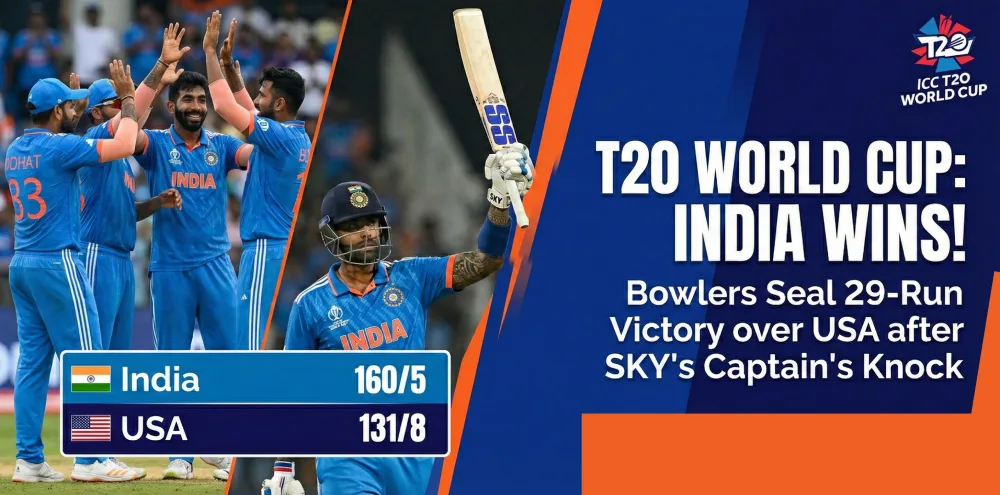
Introduction: The Significance of the Match
The T20 World Cup 2026 serves as a prominent platform for international cricket, bringing together teams from around the globe to compete at the highest level. In this context, India’s encounter with the USA is not only significant due to the competitive nature of the T20 format but also highlights the evolving landscape of cricket, where even emerging nations can challenge established teams. The match between India and the USA was particularly noteworthy, as it exemplified the shifting dynamics within the sport, showcasing the increasing competitiveness of newer cricketing nations.
The T20 format, with its fast-paced and electrifying nature, has garnered immense popularity over the years. It has inspired a fresh audience and attracted attention to countries that are traditionally not viewed as cricketing powerhouses. For the USA, participation in such a prestigious tournament provides a unique opportunity to gain exposure and experience on a global stage. As cricket continues to grow in popularity across North America, performances in high-stakes matches like this will be essential for promoting the sport and encouraging grassroots development.
Furthermore, the T20 World Cup is a crucial event for established teams, including India, as they strive not only for victory but also to maintain their status as cricketing giants. The stakes are high, as nations vie for the prestigious trophy while looking to secure their place in the annals of cricket history. The aforementioned match against the USA thus held great significance, with implications far beyond just the points on the table. It represented a crucial moment for the USA to showcase its burgeoning talent and for India to solidify its dominance in the T20 format.
Performance Evaluation of Suryakumar Yadav
Suryakumar Yadav, fondly referred to as SKY, has emerged as a pivotal figure in Indian cricket, especially highlighted during the recent T20 World Cup match where his captaincy and batting prowess played a crucial role in securing a 29-run victory over the USA. His performance not only showcased his individual skills but also emphasized his importance as a leader on the field.
In this particular match, SKY demonstrated an impressive batting style characterized by elegance and aggression. His ability to construct innings under pressure was evident, as he effectively rotated the strike while also dispatching the ball to the boundary. This versatility allowed him to adapt to different phases of the innings, be it consolidating during a slow start or accelerating when required. His authoritative stroke play and tactical foresight contributed significantly to building a formidable total.
As the captain, Suryakumar’s influence extended beyond just his batting contributions. His strategic decision-making was crucial in reshaping the team’s dynamics, fostering an environment of confidence and camaraderie. He effectively communicated with his teammates, ensuring each player understood their role in the game plan. This cohesive approach translated into improved team performance, as players rallied around his vision and execution.
Moreover, his leadership qualities were particularly evident in how he managed the bowlers and field placements, adapting strategies based on the match situation. Such adaptability in leadership is essential for success in high-stakes formats such as T20. Suryakumar Yadav’s ability to perform at a high level while leading from the front reinforces his status as one of the key players in the Indian cricket team, providing them not just with skill but also with inspiration during critical moments.
Indian Innings: Building a Competitive Total
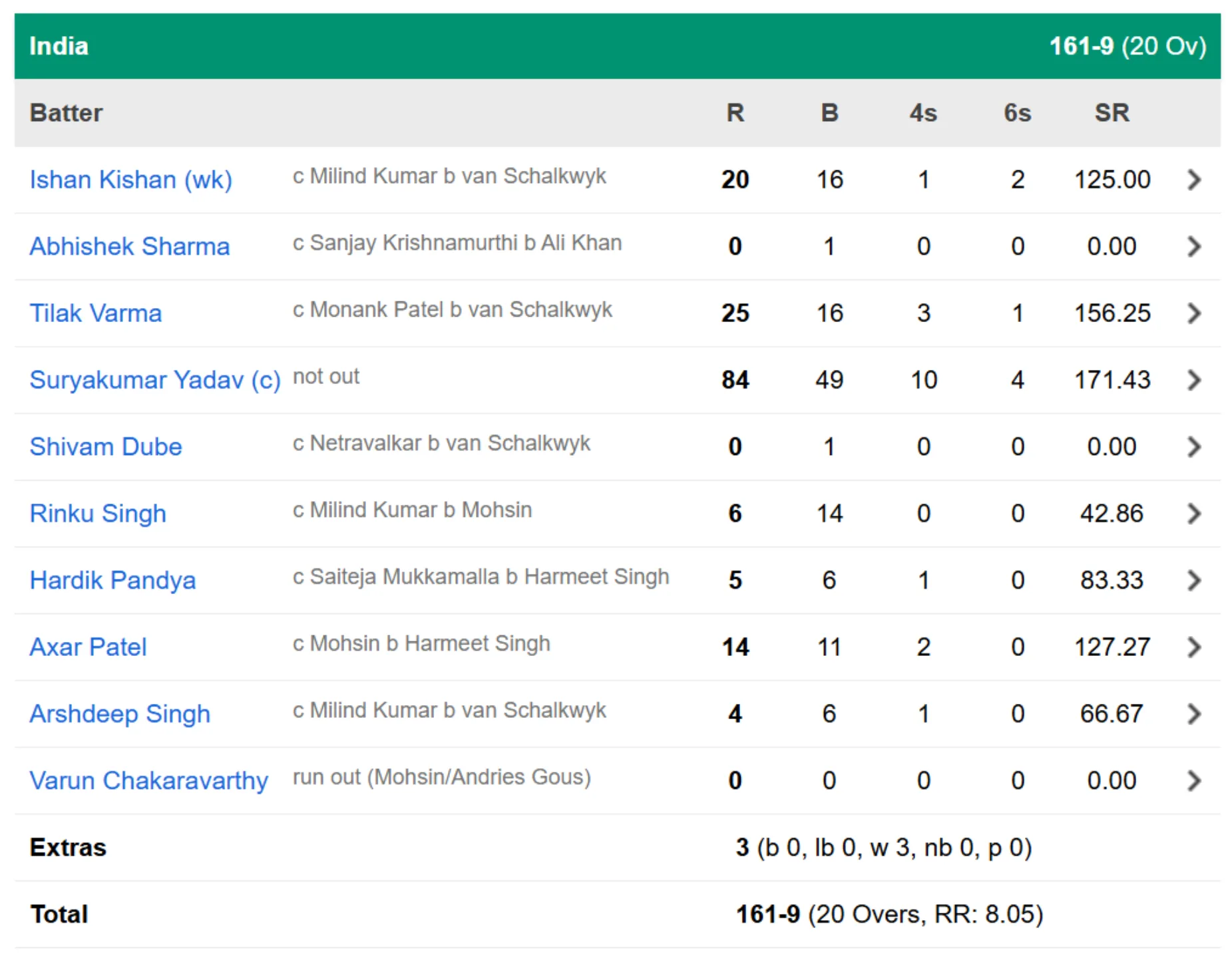
The Indian batting order faced the USA bowlers with the intent of setting a formidable total in the T20 World Cup match. The innings began briskly, with openers quickly establishing a solid foundation. The early overs saw them maneuvering effectively against the USA’s bowling attack, displaying a mix of aggressive strokes and sensible shot selection. The first wicket fell at a crucial moment, creating an opening for the middle order to stabilize the innings.
Shreyas Iyer, after a cautious start, began to find his rhythm. His ability to rotate the strike while occasionally unleashing boundaries played a key role in maintaining momentum. As the innings progressed, strategic partnerships developed, with Iyer teaming up with explosive batsman Hardik Pandya to build a meaningful partnership. Their collaboration not only absorbed pressure but also ensured that the required run rate remained achievable.
One of the hallmark moments of the innings unfolded when Iyer and Pandya put on an impressive stand, capitalizing on the weaker deliveries sent down by the US bowlers. They succeeded in attacking the spinners effectively, which resulted in crucial runs accumulating at a steady pace. The middle order’s contributions were complemented by the lower order, who, typically known for their pinch-hitting capabilities, ensured that the team crossed the 150-run mark comfortably.
As the innings neared its conclusion, Suryakumar Yadav, taking center stage, dazzled the spectators with his innovative strokes. His explosive batting style allowed India to elevate their total significantly, capitalizing on the USA’s changing bowlers. In essence, the Indian innings effectively showcased a blend of caution and aggression, ultimately resulting in a competitive score, setting a challenging target for the USA. This was instrumental in creating the platform for India’s eventual victory.
Bowling Strategy: The Indian Bowlers in Action
The Indian bowling attack showcased a well-thought-out strategy during the match against the USA, playing a pivotal role in their 29-run victory. Throughout the innings, the bowlers executed their plans with precision, demonstrating adaptability and skill in response to the evolving dynamics of the game. One of the key strategies employed was maintaining tight lines and lengths, which made it difficult for the USA batsmen to score freely. The bowlers focused on hitting the seam and creating movement in the air, capitalizing on any assistance offered by the pitch.
As the match progressed, particular attention was directed towards the death overs, where the Indian bowlers intensified their efforts. Recognizing the significance of these crucial final overs, they adopted a strategy that included yorkers and slower deliveries, aiming to disrupt the batsmen’s rhythm. The bowlers were instructed to target the base of the stumps, thus minimizing the chances of being hit for boundaries. This approach proved to be effective, as it restricted the scoring opportunities for the USA batsmen, leading to a significant number of dot balls.
The Indian bowlers also demonstrated excellent communication and coordination on the field, which allowed them to set effective field placements that complemented their bowling style. For instance, they strategically positioned fielders in key areas to cut off singles and create catching opportunities. This holistic strategy not only limited the USA’s run chase but also maintained pressure throughout the innings. In conclusion, the Indian bowling attack’s meticulous planning and execution played a fundamental role in sealing a decisive victory, showcasing the importance of strategy in T20 cricket.
USA Innings: Challenges Faced by the Batters
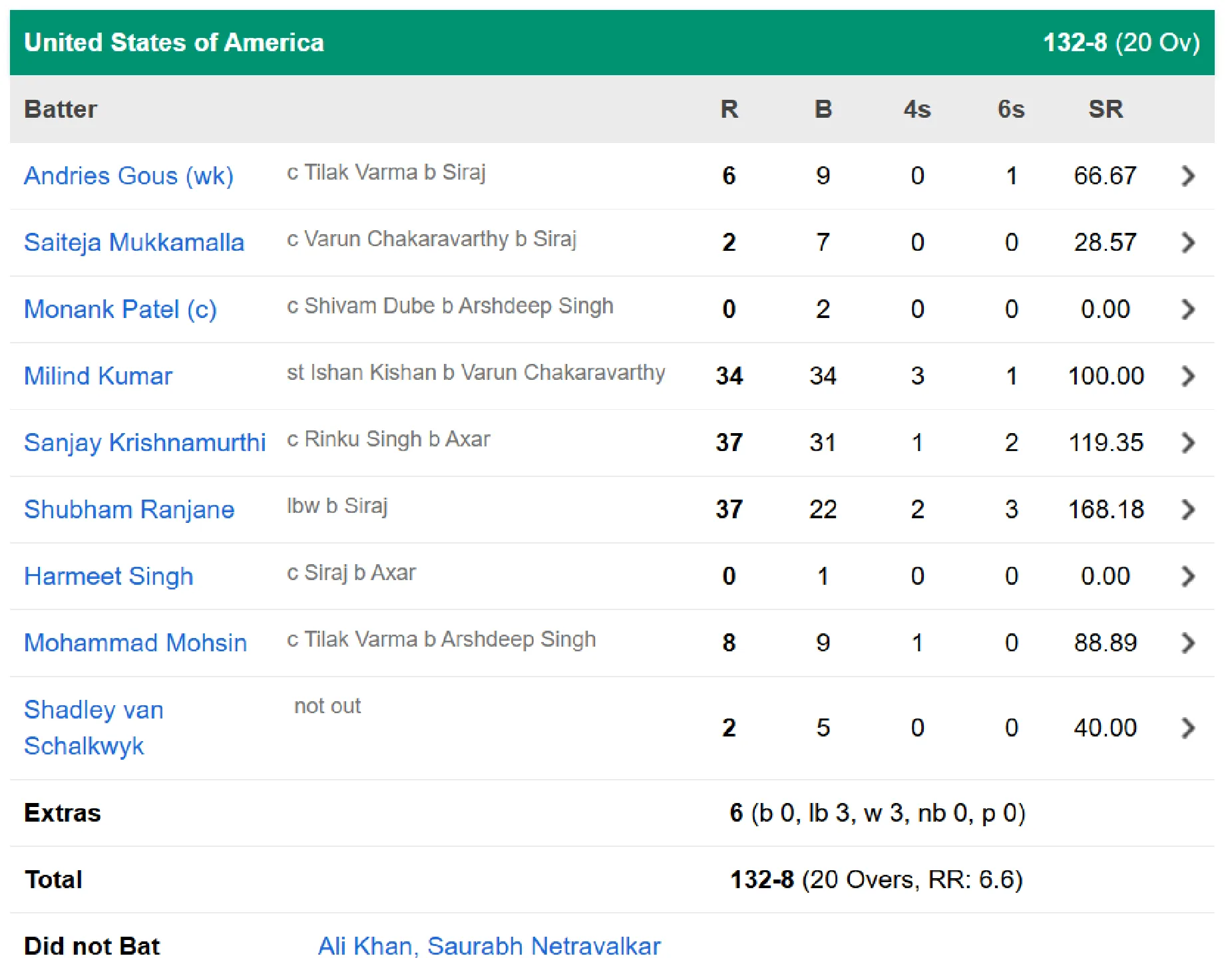
The USA batting lineup faced significant challenges during their innings against the Indian bowlers in the T20 World Cup match. With the pressure of needing runs mounting from the outset, the lack of a solid opening stand set the tone for a difficult chase. The Indian bowlers, particularly their pace attack, utilized the conditions effectively, posing a constant threat to the USA batters.
Key players from the USA, such as their captain, struggled to find form in the early overs. The bowlers employed a variety of lengths and angles, making it hard for the batters to settle. Frequent dot balls added to the mounting frustration, as the USA batters attempted to build partnerships but were consistently thwarted by the precision and skill of their opponents. Notably, the Indian spinners introduced a new dimension to the attack, effectively exploiting the turn and bounce available on the pitch, which further complicated the batting approach for the USA.
Despite these challenges, there were moments of promise during the innings. One such instance came when a middle-order batter began to find fluency, countering the pressure with impressive stroke play. However, this potential turning point was swiftly dismantled by an exceptional catch from the Indian fielders, which exemplified the level of commitment and focus in the field. The USA’s inability to convert these moments into substantial partnerships ultimately hindered their scoring ability, resulting in a mounting required run rate.
In retrospect, the USA batters faced an uphill battle against a disciplined Indian attack. The combination of high-quality bowling and missed opportunities reflected a challenging day at the crease, culminating in their inability to chase down the total set by India. This match serves as a learning experience for the USA side as they look to enhance their performance in future competitions.
Turning Point: The Moment that Altered the Game
The T20 World Cup encounter between India and the USA unveiled a decisive moment that had a profound impact on the match’s outcome. It was during the 14th over when Indian bowler Ravindra Jadeja unleashed a remarkable delivery that led to the pivotal wicket of USA’s captain. This moment became a turning point as it shifted the momentum squarely in India’s favor.
Prior to this dismissal, the USA had been exhibiting a commendable resistance against India’s bowling attack. The partnership between their top-order batsmen had provided a sense of stability and hope. However, Jadeja’s stunning delivery not only removed the captain but also dismantled the confidence the USA batsmen had built up to that point. The delivery, known for its sharp turn and precision, caught the batsman off-guard, resulting in a simple catch at first slip. This wicket triggered a cascade of problems for the USA as they lost their rhythm swiftly.
The immediate aftermath of this crucial wicket was notable. The USA’s middle-order batting lineup struggled to cope with the pressure. The loss of the captain, who had been instrumental in anchoring their innings, shattered their morale. The Indian bowlers capitalized on this momentum shift, applying increased pressure and forcing mistakes. Subsequently, wickets fell at regular intervals, and the USA’s chances of mounting a significant challenge dwindled rapidly.
This critical juncture in the match not only defined the course of the game but also highlighted the impact a single wicket can have on team dynamics. India’s disciplined bowling, exemplified by Jadeja’s remarkable delivery, coupled with the psychological effects of the captain’s dismissal, ultimately sealed a 29-run victory for the team, showcasing the pivotal nature of such moments in cricket.
Post-Match Analysis: Key Takeaways
The recent T20 World Cup clash between India and the USA culminated in a notable 29-run victory for India, showcasing both teams’ strengths and weaknesses. The match highlighted India’s robust bowling attack, with bowlers displaying remarkable precision and strategy. Key wicket-takers played pivotal roles, dismantling the American batting line-up and capitalizing on the new ball’s movement under lights. India’s disciplined bowling, particularly in the death overs, limited the USA’s scoring opportunities, which will be crucial for achieving success in upcoming fixtures.
From the USA’s perspective, their batting lineup faltered under pressure, indicating a need for improvement in handling high-stakes situations. Despite a spirited effort, they struggled to build partnerships, which is vital in the format. Coaches may reflect on the necessity of strategic restructuring to reinforce their batting approach while focusing on the psychological aspects of performance in international tournaments.
Captain SKY’s innings was an exemplary display, anchoring the team’s innings and setting a competitive total. His influence transcended runs scored, boosting team morale and confidence. Coaches and analysts might advocate for a focus on developing young talents who can emulate such poise under pressure. For the USA, assessing the match’s implications could mean re-evaluating their training programs and game tactics to better equip their squad against top-tier opponents.
In considering the future of both teams within this tournament, India’s consistency bodes well for their journey ahead, while the USA must take lessons from this match to build resilience and adaptability. The game’s outcome undoubtedly sets the stage for important adjustments as both teams prepare for their subsequent encounters.
Fan Reactions: The Excitement and Expectations
The recent T20 World Cup match between India and the USA has stirred a wave of enthusiasm among cricket fans worldwide. Fans took to social media platforms to express their exhilaration following India’s impressive 29-run victory, a match that showcased not only the team’s batting prowess but also the exceptional captaincy of Suryakumar Yadav. Under his leadership, the Indian bowlers executed a strategic approach that effectively dismantled the USA’s batting lineup, reflecting Yadav’s mindset and tactical acumen.
Analysts and commentators have praised Yadav’s balance between aggression and prudence, particularly his decision-making during critical moments of the game. He led his team by example, demonstrating confidence that resonated well with the players on the field. This has sparked discussions around Yadav’s potential as a future captain for the national side, even beyond the tournament.
Social media sentiments encapsulated a range of reactions, from jubilation over the bowlers’ performance to excitement about the future of Indian cricket under Yadav’s guidance. Fans posted numerous highlights from the match, celebrating specific wickets taken and skillful deliveries executed by the bowlers. The hashtag #SKYcaptaincy trended as supporters shared their admiration for Yadav, indicating a growing expectation for continued success in the tournament.
Moreover, the encouraging performance by the bowlers has intensified dialogue among cricket analysts, who have begun speculating on India’s prospects further into the T20 World Cup based on this match. The fans’ enthusiasm, coupled with expert analysis, portrays a sense of confidence in the Indian cricket team’s capabilities and a hopeful outlook for their upcoming matches.
Conclusion: Looking Ahead in the T20 World Cup
The recent encounter between India and the USA in the T20 World Cup revealed significant implications for both teams as they transition to the next stages of the tournament. India’s 29-run victory, secured by a commanding performance from captain SKY, not only reinforces their stature as a formidable cricketing nation but also offers valuable lessons for the USA as they develop their competitive edge in international cricket.
For India, the win solidifies their position in the standing and boosts their morale. The blend of experienced players alongside emerging talents is proving to be an effective strategy, with the bowlers exhibiting discipline that will be crucial in the upcoming fixtures against stronger teams. As they progress in the World Cup, India’s focus will likely shift toward maintaining momentum, with strategic planning required to counteract different opponents’ strengths. The performance against the USA shows that the squad is in good form, but they cannot afford to be complacent as they strive for the championship title.
On the other hand, the USA, though defeated, exhibited signs of potential that they can build upon. Each match presents a learning opportunity, and the USA will need to analyze their strategy and execution during the game against India. Highlighting key areas for improvement, such as bowling effectiveness and partnership building during batting phases, will be vital as they prepare for their next encounters. The USA’s participation in the T20 World Cup marks a significant development in their cricketing journey, and the experience gained thus far will undoubtedly enhance their performance in future fixtures.