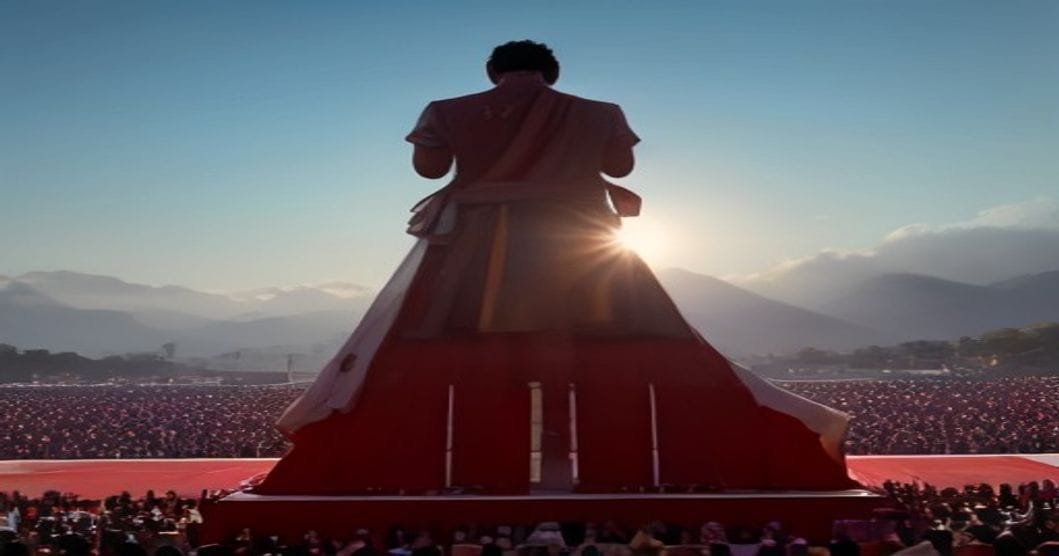
A fresh political storm has erupted in India, centering on the national song ‘Vande Mataram’. The Bharatiya Janata Party (BJP) has publicly accused former Congress President Sonia Gandhi of opposing the singing of the full ‘Vande Mataram’. This accusation has sparked a significant Vande Mataram row, with the BJP aggressively demanding an apology from Gandhi. Conversely, the Indian National Congress has vehemently rejected these allegations. They label them as a deliberate attempt by the ruling party to divert public attention from more pressing national issues.
This controversy has quickly escalated, drawing in prominent political figures and historical descendants. Furthermore, it highlights the deeply ingrained political rivalries within the country. The BJP’s accusations are not trivial. They touch upon national pride and respect for revered symbols. Consequently, the Congress’s strong denial underscores the high stakes involved in such cultural and political debates.
📋 Quick Details
| Controversy Trigger | Allegation of opposing full 'Vande Mataram' |
|---|---|
| Key Accused Figure | Sonia Gandhi |
| Accusing Party | Bharatiya Janata Party (BJP) |
| Defending Party | Indian National Congress |
| Key BJP Leaders Involved | Amit Shah, Mohan Yadav |
| Key Congress Leaders Involved | K.C. Venugopal |
| Historical Link | Bankim Chandra Chattopadhyay (composer) |
| Nature of Demand | Public Apology |
| Central Issue | Respect for National Song and National Symbols |
| Political Context | Ongoing political rivalry and nationalist discourse |
The Vande Mataram Controversy: An Overview
The genesis of this latest Vande Mataram row lies in the BJP’s assertion that Sonia Gandhi had, at some point, expressed opposition to the complete rendition of the national song. Senior BJP leaders have cited this alleged stance as disrespectful. They believe it undermines the historical and emotional significance of ‘Vande Mataram’ for millions of Indians. Consequently, their demands for an apology have been unequivocal and widespread across various political platforms.
On the other hand, the Congress party has been swift to defend its leader. They argue that the BJP is misrepresenting facts and resorting to opportunistic politics. Congress leaders maintain that their party has always upheld the sanctity of national symbols. Therefore, they view the BJP’s charges as baseless and politically motivated smear campaigns. This back-and-forth illustrates the intense ideological battle between the two major political forces in India. Moreover, it reflects deeper fault lines concerning national identity and cultural heritage.
Historical Context of Vande Mataram
‘Vande Mataram’ holds an indelible place in India’s history. It was composed by Bankim Chandra Chattopadhyay in 1876. This powerful hymn was originally part of his Bengali novel ‘Anandamath’, published in 1882. The song quickly became a rallying cry during India’s freedom struggle against British rule. Patriots and revolutionaries across the nation chanted it with fervor. Its verses evoke a deep sense of devotion to the motherland. Thus, it inspired countless individuals to sacrifice for independence.
The song’s profound impact led to its adoption as the National Song of India in 1950. However, the first two verses were designated as the official National Song. This decision was made after extensive debate. Certain sections of society raised concerns regarding the song’s religious connotations. Despite these discussions, its status as a symbol of national pride remains undisputed. Many view it as a cornerstone of India’s cultural and historical legacy. Consequently, any perceived disrespect towards it often triggers strong public and political reactions.
BJP’s Stance and Demands
The BJP has been particularly vocal in its criticism of Sonia Gandhi. Senior leaders, including Union Home Minister Amit Shah and Madhya Pradesh Chief Minister Mohan Yadav, have spearheaded the attack. Amit Shah, addressing a public gathering, reportedly stated that ‘Congress should feel ashamed’ over the Vande Mataram row. He accused the Congress of consistently disrespecting national symbols. Shah emphasized the song’s pivotal role in unifying Indians during the independence movement. He believes that questioning its sanctity is an affront to national sentiment.
Furthermore, Mohan Yadav echoed similar sentiments. He asserted that both Sonia and Rahul Gandhi had shown disrespect towards ‘Vande Mataram’. Yadav, like other BJP leaders, called for an immediate and unconditional apology from the Congress leadership. The party’s strategy appears to be twofold. First, they aim to corner the Congress on an issue of national pride. Second, they seek to portray the opposition as indifferent to India’s cultural heritage. This approach resonates with a significant portion of their voter base. Therefore, the BJP is keen on pressing this narrative forward.
Congress’s Rebuttal and Counter-Allegations
The Congress party, for its part, has dismissed the BJP’s allegations as politically motivated. K.C. Venugopal, a prominent Congress leader, responded sharply to the accusations. He suggested that the BJP is using the Vande Mataram row to divert public attention. According to Venugopal, the ruling party is attempting to shift focus from more critical issues. These issues include economic challenges, unemployment, and other governance-related concerns. He stated that the BJP frequently resorts to such tactics when cornered on substantive policy matters.
Congress leaders also reiterated their party’s historical commitment to national symbols. They pointed out that many Congress stalwarts actively participated in the freedom struggle. These leaders embraced ‘Vande Mataram’ as a powerful expression of patriotism. Therefore, the party views the accusations against Sonia Gandhi as an insult to its legacy. They argue that the BJP is attempting to rewrite history. They also contend that the ruling party is using nationalistic sentiments for narrow political gains. This defense highlights the deep ideological chasm between the two parties.
The Role of Bankim Chandra’s Descendant
Adding another layer to the controversy is the involvement of a descendant of Bankim Chandra Chattopadhyay. The descendant has publicly sought an apology from Sonia Gandhi. This intervention lends historical weight to the BJP’s demands. It also intensifies the emotional aspect of the debate. The descendant’s plea underscores the song’s personal and familial significance. They perceive any perceived slight against ‘Vande Mataram’ as an affront to their ancestor’s legacy. Furthermore, their public statement amplifies the pressure on the Congress leadership.
This particular aspect of the Vande Mataram row resonated strongly with conservative sections. It transformed the political debate into a matter of cultural and ancestral pride. The descendant’s involvement frames the issue beyond mere party politics. Instead, it positions it as a question of respecting historical figures and their contributions. Consequently, this has made it even more challenging for the Congress to simply dismiss the accusations. They must now contend with a morally charged appeal from a figure directly linked to the song’s creator.
Political Ramifications and Public Discourse
The Vande Mataram row carries significant political ramifications. It serves as a potent tool for the BJP to rally its base. The party often emphasizes cultural nationalism and national pride. Issues like ‘Vande Mataram’ align perfectly with this narrative. By accusing the Congress of disrespecting a national symbol, the BJP aims to consolidate nationalist votes. It also seeks to project itself as the true custodian of Indian culture and heritage. This strategy has proven effective for them in past elections. Therefore, they continue to employ it.
The controversy also dominates public discourse. It ignites debates across social media, news channels, and public forums. Opinions are sharply divided, reflecting India’s diverse political landscape. Some view the BJP’s demands as legitimate and necessary. They believe that national symbols must be treated with utmost reverence. Others criticize the BJP for politicizing a sensitive issue. They argue that such debates distract from critical governance challenges. This polarization highlights the deep divisions within Indian society. It also underscores how cultural symbols can be weaponized in political battles. Moreover, it showcases the power of narrative control in shaping public perception.
Previous Controversies Surrounding Vande Mataram
‘Vande Mataram’ has been at the center of controversies even before this current Vande Mataram row. In the early 20th century, there were debates about its compulsory singing in schools. Certain religious minority groups expressed reservations about some verses. They felt these verses had religious connotations that clashed with their beliefs. The Indian National Congress itself, under Mahatma Gandhi, engaged in discussions to address these concerns. As a result, only the first two stanzas were formally recognized as the National Song. This decision aimed to achieve broader consensus and respect diverse sentiments.
More recently, political parties have periodically reignited debates surrounding the song. These discussions often revolve around questions of national identity and secularism. For instance, arguments have arisen over whether it should be mandatory to sing the song in all public institutions. These past controversies illustrate the song’s complex legacy. They also demonstrate its enduring capacity to stir strong emotions. Additionally, they reflect the ongoing struggle to balance national unity with cultural and religious diversity in India. The current debate thus fits into a long history of discussions surrounding this significant national anthem.
The Significance of National Symbols in Indian Politics
National symbols, such as ‘Vande Mataram’, the National Flag, and the National Anthem, play a crucial role in Indian politics. They are not merely emblems; they represent the collective identity, values, and aspirations of the nation. Political parties frequently invoke these symbols to foster unity or to criticize opponents. Accusations of disrespecting national symbols can profoundly impact a party’s image. They can either garner widespread support or invite severe condemnation. This is precisely why the BJP is leveraging the Vande Mataram row against the Congress.
In a diverse country like India, national symbols serve as powerful unifying forces. They transcend linguistic, regional, and religious differences. However, the interpretation and usage of these symbols often become battlegrounds for ideological conflicts. Parties use them to define their version of nationalism. They also use them to question the patriotism of their rivals. Therefore, debates surrounding national symbols are rarely just about the symbols themselves. They are usually proxy battles over fundamental questions of nationhood, secularism, and political legitimacy. The current conflict is a clear example of this broader political dynamic at play.
The ongoing Vande Mataram row is more than just a political skirmish. It reflects deeper ideological divisions within India’s political landscape. The BJP’s aggressive stance underscores its commitment to a cultural nationalist agenda. In contrast, the Congress’s defense highlights its struggle to balance national symbols with inclusive secularism. As the debate continues, it is likely to remain a significant point of contention. It will also continue to shape public perception regarding national identity and political leadership. Ultimately, this controversy underscores the enduring power of historical symbols in contemporary Indian politics.
For more real-time news updates and announcements, visit our homepage.