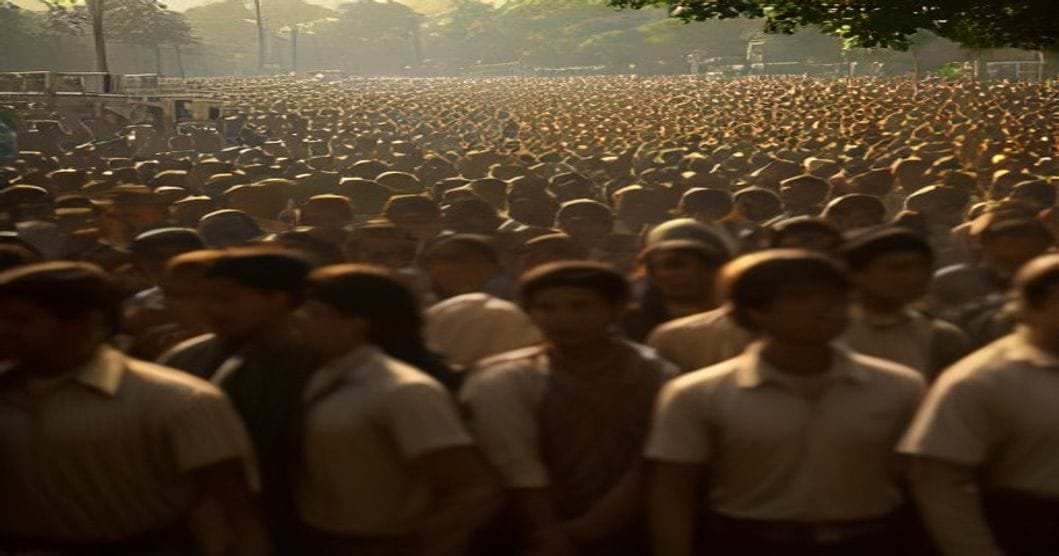
Jharkhand is currently grappling with significant political upheaval. Widespread discontent among job aspirants has ignited a series of fervent demonstrations. In response, the Bharatiya Janata Party (BJP) has vocally demanded that the Congress party withdraw its support from the Hemant Soren-led government. This escalating tension highlights the severe challenges facing the state administration. The ongoing Jharkhand government job protests represent a critical juncture for the state’s political landscape.
Moreover, the situation gained national attention with Congress leader Rahul Gandhi’s strong condemnation of police action against the protesting students. His intervention underscores the seriousness of the public’s grievances. The state’s political climate remains charged. The future of the ruling coalition hangs precariously in the balance.
📋 Quick Details
| Primary Issue | Government job aspirants' protests |
|---|---|
| Key Demand | Fair recruitment policies, address 'lost years' |
| Government in Focus | Hemant Soren-led JMM-Congress-RJD coalition |
| BJP's Demand | Congress to withdraw support from current government |
| Rahul Gandhi's Stance | Condemns police action against protesters |
| Chief Minister's Response | Open letter to students, warning against political traps |
| Nature of Unrest | Marches and demonstrations by job seekers |
| Political Climate | Heightened instability and inter-party tension |
| Impacted Group | Thousands of youth seeking government employment |
| Underlying Cause | Allegations of exam fraud and delayed recruitment |
The Roots of Discontent: Understanding the Jharkhand Government Job Protests
Thousands of young individuals in Jharkhand have taken to the streets. They are demanding immediate action on long-standing issues concerning government job recruitment. Their plight represents a collective outcry over what they describe as ‘lost years’. These years refer to numerous delays, cancellations, and alleged irregularities in the recruitment processes. Consequently, many aspirants have seen their prime eligibility period pass by without securing gainful employment.
Specifically, the core of these widespread Jharkhand government job protests stems from deeply rooted systemic problems. Many recruitment examinations have faced accusations of fraud. Other processes have simply been abandoned mid-way. These issues have systematically eroded public trust in the state’s hiring mechanisms. Furthermore, a substantial number of vacancies have remained unfilled for extended periods. This has left a large segment of the educated youth without opportunities.
Furthermore, the students’ demands are clear and comprehensive. They are calling for transparent recruitment policies. They also seek a fixed calendar for examinations and results. Additionally, they insist on strict action against those responsible for alleged exam scams. For many, these jobs are not just about personal livelihoods; they represent a fundamental promise of a stable future. Therefore, the emotional intensity of these protests is palpable.
The ‘Lost Years’ Phenomenon and Its Impact
The term ‘lost years’ encapsulates a profound sense of injustice. Many aspirants spent their youth diligently preparing for competitive exams. They invested considerable time and financial resources. However, their efforts were repeatedly thwarted by administrative failures. This continuous cycle of hope and disappointment has left them disillusioned. Their academic qualifications often become outdated, or their age exceeds eligibility limits. Consequently, their career prospects diminish significantly.
Consider, for instance, a student who has prepared for five years. If multiple exams are cancelled or tainted by scandal during this period, their entire career trajectory is jeopardized. The psychological toll on these young individuals is immense. This systemic failure has not only impacted individual lives but also the collective morale of Jharkhand’s youth. Hence, their desperate plea for justice resonates deeply throughout society. The ‘lost years’ are a powerful symbol of their struggle.
Moreover, the economic implications are also substantial. A vibrant job market is crucial for economic development. When young, educated individuals are unable to find employment, it hinders economic growth. It also leads to social unrest. The state loses out on skilled labor and fresh talent. Therefore, addressing the ‘lost years’ is not merely a social issue; it is an economic imperative. The government must recognize this broader impact.
BJP’s Political Offensive: Demanding Withdrawal of Support
Against this backdrop of public unrest, the BJP has launched a scathing attack on the Hemant Soren government. The party has directly challenged the Congress, a key ally in the ruling coalition. They have urged the Congress to sever ties with the JMM-led government. This move is a calculated political strategy. It aims to exploit the growing public dissatisfaction. It also seeks to create a rift within the alliance.
The BJP’s argument posits that the current government has failed to address the aspirations of the state’s youth. They argue that the government’s inaction and alleged complicity in recruitment irregularities have created this crisis. Therefore, they contend that Congress’s continued support for such a government is indefensible. This demand puts Congress in a difficult position. The BJP clearly aims to capitalize on this vulnerability. The Jharkhand government job protests offer a fertile ground for political maneuvering.
Furthermore, the BJP leadership has framed this as a moral issue. They suggest that any party supporting a government that disregards its youth’s future is ethically compromised. Their public statements are designed to pressure Congress. They want Congress to demonstrate accountability. This pressure also serves to highlight the BJP as a champion for the common citizen. Therefore, the political stakes are incredibly high for all parties involved.
The Congress Dilemma in Jharkhand’s Political Turmoil
The Congress party finds itself in a precarious situation. As a coalition partner, it shares responsibility for the government’s actions. Withdrawing support would destabilize the government. It could potentially trigger a political crisis. However, remaining silent or continuing support risks alienating a significant voter base. These voters are deeply affected by the ongoing Jharkhand government job protests.
On one hand, leaving the alliance could lead to fresh elections. This outcome might not be favorable for Congress. On the other hand, maintaining the status quo could damage its reputation. It might be seen as complicit in the government’s perceived failures. This is a classic political tightrope walk. The party must carefully weigh its options. Its decision will have long-term consequences for its standing in Jharkhand. Therefore, the internal deliberations within Congress are undoubtedly intense.
Additionally, national political dynamics also play a role. The Congress high command must consider the broader implications of its decision. Regional political alliances are crucial. Any move in Jharkhand could set precedents for other states. Consequently, the pressure on Congress is multi-faceted. They face demands from the opposition, from their own cadres, and from the public. The ongoing unrest complicates their strategic choices even further.
Rahul Gandhi’s Stance: Condemnation of Police Action
Adding another layer of complexity, Rahul Gandhi, a prominent national leader of the Congress party, has unequivocally condemned the police action against the protesting job aspirants. His strong remarks have amplified the issue. They have brought national scrutiny to the state government’s handling of the protests. Gandhi’s statement is significant because it comes from within the ruling alliance’s broader political family. It suggests a potential divergence in views.
His condemnation focuses on the use of force against peaceful demonstrators. He emphasized that students demanding their rights should not be met with such measures. This stance aligns with the Congress party’s traditional advocacy for civil liberties. However, it also implicitly criticizes a government in which his own party is a partner. This creates an awkward dynamic for the coalition. The impact of the Jharkhand government job protests thus reaches beyond state borders.
Furthermore, Gandhi’s intervention provides a moral high ground for the students. It validates their grievances at a national level. It also puts additional pressure on the Hemant Soren government to review its approach. The optics of a national leader from an allied party criticizing state police action are not favorable for the ruling dispensation. Consequently, the government will likely face increased calls for accountability and restraint. This complicates their response considerably.
The Role of Police Action in Public Perception
The use of police force against unarmed protesters often backfires. It can galvanize public support for the demonstrators. It also paints the government in a negative light. Images and videos of confrontations quickly spread. These visuals shape public opinion. Therefore, any excessive force can escalate tensions. It can also turn an localized protest into a broader movement. This is a critical factor in the ongoing Jharkhand government job protests.
When citizens, especially students, perceive their government as repressive, trust erodes rapidly. This trust deficit can have long-lasting consequences for governance. It can make future dialogue and resolution much harder. Authorities must always prioritize de-escalation. They must also ensure that fundamental rights to protest are respected. Failure to do so only exacerbates the crisis. The government must therefore tread carefully.
Moreover, such incidents can provide ammunition to the opposition. Political rivals often use these events to highlight government shortcomings. Rahul Gandhi’s comments underscore this point perfectly. They leverage the public outcry against police heavy-handedness. Consequently, the government faces a dual challenge: addressing the original grievances and managing the fallout from its response. This complex situation requires delicate handling.
Chief Minister Hemant Soren’s Response: An Open Letter
Amidst the mounting pressure, Chief Minister Hemant Soren addressed the protesting students directly. He published an open letter. In this letter, he urged them ‘not to fall into a political trap’. This message reflects an attempt to de-politicize the protests. He aimed to portray the demonstrations as being manipulated by opposition forces. It was a clear strategy to shift blame and reduce the perceived legitimacy of the agitation.
Soren’s letter likely sought to reassure the students. He aimed to communicate that their concerns were being heard. However, he also implied that external elements were exploiting their genuine grievances for political gain. This narrative is common for governments facing widespread dissent. It attempts to invalidate the opposition’s involvement. It also tries to discourage further participation in protests. Yet, the persistent Jharkhand government job protests suggest this approach may have limited impact.
Furthermore, the Chief Minister’s message also carried an underlying plea for patience. He might have hinted at ongoing efforts to resolve the issues. However, students who have waited for years often have little patience left. Their frustration is deep-seated. Therefore, a simple call to avoid ‘political traps’ might not be sufficient. Concrete actions and immediate solutions are what they truly demand. The government must move beyond rhetoric. It needs to offer tangible progress.
Analyzing the CM’s Strategy Against Jharkhand Government Job Protests
The Chief Minister’s decision to write an open letter is a direct communication tactic. It bypasses traditional media channels. It allows him to speak directly to the affected youth. This approach can be effective if combined with genuine policy changes. However, if seen as mere damage control, it can backfire. Public perception is key in such situations. His words are being scrutinized closely by the students and the opposition.
By framing the protests as a ‘political trap’, Soren attempts to undermine their organic nature. He tries to suggest that the students are unwitting pawns in a larger political game. This strategy carries risks. It can further alienate the very people he is trying to address. It might also deepen their skepticism towards government intentions. Trust, once lost, is extremely difficult to regain. Especially when dealing with a deeply frustrated populace.
Moreover, the success of this strategy hinges on the government’s subsequent actions. If the administration follows up the letter with concrete measures addressing the recruitment issues, it might gain credibility. If not, the letter could be perceived as an empty promise. It could even be seen as an insult to the intelligence of the protesting students. Therefore, the long-term impact of this open letter remains to be seen. The ball is now firmly in the government’s court.
Implications for Governance and Political Stability in Jharkhand
The current political turbulence has significant implications for governance in Jharkhand. A government constantly under siege by protests and opposition demands faces challenges in effective administration. Policy implementation can slow down. Development projects might suffer delays. The focus often shifts from governance to crisis management. This is not ideal for any state, particularly one with pressing developmental needs.
Furthermore, the stability of the ruling coalition is now under intense scrutiny. The BJP’s call for Congress to withdraw support is designed to test this stability. Any internal disagreement within the alliance could lead to a vote of no confidence. It could also trigger early elections. This uncertainty creates an environment of instability. Investors and businesses might become hesitant. This further impacts the state’s economic prospects. The Jharkhand government job protests thus have ripple effects.
Additionally, public trust in political institutions is at an all-time low. When governments fail to deliver on basic promises, like fair employment, citizens lose faith. This erosion of trust can have profound democratic consequences. It can lead to voter apathy. It can also fuel cynicism about the political process itself. Therefore, resolving the current crisis is not just about jobs; it is about restoring faith in governance. This is a monumental task for the current administration.
The Road Ahead for Jharkhand Amidst Mounting Pressure
The path forward for Jharkhand’s government is fraught with challenges. The administration must address the root causes of the Jharkhand government job protests. This requires more than just political statements. It demands tangible reforms in the recruitment processes. It also necessitates accountability for past irregularities. Without genuine reforms, protests will likely continue. The cycle of discontent will persist. Therefore, decisive action is paramount.
The coalition partners, especially Congress, must decide their strategic alignment. They need to either robustly defend the government’s actions or push for significant changes from within. Their decision will define their political future in the state. Furthermore, the opposition will continue to exert pressure. They will aim to highlight every perceived failure of the government. This will keep the political temperature high. Thus, the state braces for continued ferment.
Ultimately, the resolution of this crisis depends on a multi-pronged approach. This includes sincere dialogue with student representatives. It also requires swift investigation into past malpractices. Most importantly, it calls for the implementation of a transparent and efficient recruitment system. Only then can the ‘lost years’ be acknowledged. Only then can the aspirations of Jharkhand’s youth be truly addressed. The state needs leadership that can unite rather than divide.
For more real-time news updates and announcements, visit our homepage.