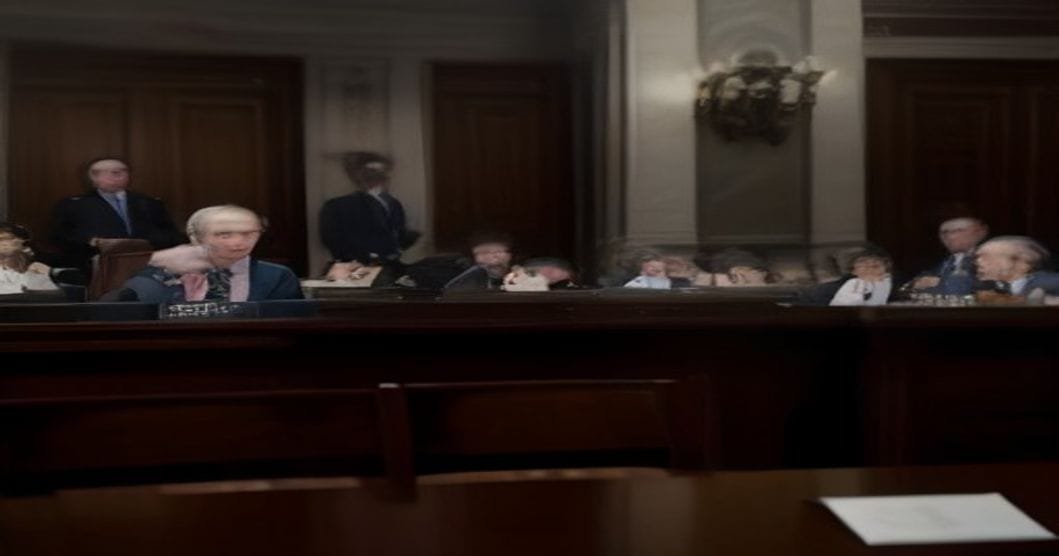
The debate surrounding US Senate Tariffs Opposition is intensifying. Prominent Senators Ron Wyden and Rand Paul have voiced strong objections to proposed 100% tariffs on goods from India and China. These tariffs are part of a broader US Senate bill. Specifically, this legislation aims to penalize countries that continue to purchase Russian oil and gas. Critics argue that such aggressive economic measures could severely harm American interests. They believe these actions might equate to “America shooting itself in the foot.”
Understanding the Proposed US Senate Tariffs
The US Senate recently passed a bill, sparking this significant controversy. This legislation focuses intently on implementing sanctions. It targets nations buying Russian oil and gas. This move is a direct response to Russia’s ongoing conflict in Ukraine. The United States and its allies seek to curtail Russia’s revenue streams. Their goal is to reduce Russia’s ability to fund military operations. The bill reflects a very hawkish stance. It seeks to apply significant, indeed unprecedented, economic pressure on targeted nations.
📋 Quick Details
| Proposed Tariffs Target | Goods from India and China |
|---|---|
| Proposed Tariff Rate | 100% |
| Bill’s Primary Goal | Penalize countries buying Russian oil/gas |
| Key Opposing Senators | Ron Wyden, Rand Paul |
| Senator Wyden’s Main Concern | Economic harm to US consumers and businesses |
| Senator Paul’s Main Argument | Free market principles, unintended consequences |
| Impact on India | Strains US ties, energy security dilemma |
| Impact on China | Global supply chain disruption, new trade war |
| Historical Precedent | Smoot-Hawley Tariff Act of 1930 |
| Critics’ Warning | “America shooting itself in the foot” |
This particular bill, championed by influential figures like Senator Lindsey Graham, represents a substantial escalation of existing measures. It goes far beyond previous sanctions. It proposes an extreme and unprecedented 100% tariff on goods. These tariffs would apply to specific countries. India and China are explicitly among the primary nations targeted by this legislation. The Senate’s intention is remarkably clear. They want to isolate Russia economically on the global stage. They also want to deter any nation from continuing to support its energy sector through purchases.
Moreover, the bill’s proponents argue that strong economic disincentives are necessary. They believe these disincentives can force countries to align more closely with Western sanctions. They highlight the moral imperative to stand against aggression. Therefore, they view these tariffs as a critical tool. This tool can be used to achieve broader geopolitical objectives. This includes weakening Russia’s war machine and promoting stability.
Senator Wyden’s Economic Concerns and Strategic Warnings
Senator Ron Wyden, a highly respected figure in Congress, has expressed deep concern. He chairs the powerful Senate Finance Committee. Wyden highlighted the potential for severe and widespread economic repercussions. He believes these proposed tariffs would significantly harm American consumers. Furthermore, he argues they could critically damage American businesses, many of which rely on global supply chains and affordable imports. Imposing 100% tariffs is an extreme and drastic measure.
This policy, Wyden suggested, could easily lead to retaliatory tariffs from affected countries. Such actions would create a dangerous cycle of economic tit-for-tat. This scenario would escalate trade wars, rather than resolving underlying issues. Wyden’s analysis focuses on the practical economic impact. He foresees increased costs, reduced competitiveness, and job losses in the US. Consequently, the economic benefits, if any, would be far outweighed by the significant drawbacks. He also pointed out that such measures could destabilize global markets.
Wyden also emphasized the crucial importance of maintaining strong alliances. He also stressed robust global trade relationships. He suggested that such punitive tariffs could alienate key strategic partners. India, for instance, is a vital democratic and economic partner for the US. Pushing India towards other economic blocs is a very real and concerning risk. This move could severely undermine long-term US foreign policy goals in the Indo-Pacific. Consequently, Wyden called for a more nuanced and strategic approach. He advocated for sustained diplomatic solutions and precisely targeted sanctions, instead of broad, sweeping tariffs.
He underlined that American economic strength is tied to its network of allies. Disrupting these alliances through aggressive trade policies could weaken the US globally. Therefore, a careful assessment of geopolitical consequences is paramount. This includes considering how tariffs might impact collaborative efforts on security and technology. The senator’s position reflects a deep understanding of international trade dynamics. It also shows an awareness of the delicate balance required in foreign policy.
Senator Paul’s Free Market Arguments and Unintended Consequences
Senator Rand Paul also strongly opposes these proposed tariffs. He is well-known for his staunch libertarian views and consistent advocacy for free markets. Paul argued vehemently against extensive government intervention in economic affairs. He firmly believes these tariffs are inherently counterproductive. They would disrupt intricate global supply chains. Moreover, they would inevitably raise costs for American consumers across various sectors. Paul consistently emphasizes the fundamental principle of economic freedom. He views these tariffs as a direct infringement upon that essential freedom.
Paul often speaks out against protectionist policies. He believes they ultimately harm domestic economies more than they protect them. He articulated that American businesses heavily rely on global trade. They also depend on affordable imports to remain competitive. Imposing such heavy and broad tariffs could cripple various American industries. It would also significantly increase already high inflation rates, hitting household budgets hard. Therefore, Paul’s opposition stems deeply from a free-market philosophy. He advocates for minimal government interference in commerce. He also champions open and unrestricted trade policies globally.
Furthermore, Paul highlighted the danger of unintended consequences. He posited that tariffs rarely achieve their stated objectives without creating new, often worse, problems. For example, American companies might struggle to source crucial components. They might also face higher manufacturing costs. This could force them to move production overseas. This move would actually hurt American jobs. It would also reduce domestic production capacity. Paul’s arguments often resonate with those who fear government overreach. They also appeal to those who prioritize individual economic liberty. He stresses that true economic strength comes from competition and innovation, not protectionism.
He consistently warns that such measures could isolate the US. They could also provoke a global trade war. This would have devastating effects on American prosperity. Thus, his perspective is rooted in a belief that markets, left largely unfettered, are the most efficient allocators of resources. He contends that punitive tariffs distort these natural market forces. This distortion, in turn, leads to inefficiencies and economic hardship for everyone involved. His stance is clear: tariffs are a dangerous and misguided policy choice.
Profound Implications for India Amidst US Senate Tariffs Opposition
India has consistently maintained a cautious, non-aligned stance regarding the Russia-Ukraine conflict. It relies significantly on Russian energy imports. Russia, importantly, offers crude oil at significantly discounted prices. This arrangement helps India manage its immense energy security needs. India is the world’s third-largest oil importer. It profoundly prioritizes its economic stability and growth. Therefore, a complete cessation of Russian oil imports is an extremely challenging and complex issue for India’s policymakers to navigate. This dependency on Russian energy is a critical national interest for India.
These proposed 100% tariffs pose an extraordinarily significant challenge. They could severely strain the otherwise burgeoning US-India relationship. Both countries share a crucial strategic partnership. This alliance is considered vital in the dynamic Indo-Pacific region. Washington frequently views India as an essential counterbalance to China’s growing influence. However, applying such intense economic pressure could inadvertently force India into incredibly difficult choices. It might lead India to seriously consider diversifying its geopolitical alliances. This could fundamentally undermine long-standing efforts to strengthen democratic partnerships in the region and globally.
India’s trade with the US is truly substantial, encompassing a wide array of goods and services. Imposing 100% tariffs would drastically increase import costs for many Indian products. This would directly and negatively affect Indian exporters, making their goods uncompetitive. It would also severely impact American consumers, who rely on affordable Indian products. Many Indian goods, from textiles to pharmaceuticals, would become prohibitively expensive. This could lead to a significant economic downturn for specific sectors within India. The Indian government would certainly need to respond decisively. Its response might include actively seeking alternative markets for its exports. It might also involve forging new trade agreements with other nations, potentially outside the traditional Western sphere of influence.
Furthermore, India’s foreign policy is built on strategic autonomy. It seeks to maintain relationships with multiple global powers. Being forced to choose sides under economic duress runs counter to this principle. Such a move could provoke resentment. It might also push India closer to other powers, including Russia and potentially China, in a defensive posture. The tariffs, therefore, risk achieving the exact opposite of their intended effect. Instead of isolating Russia, they could inadvertently create new alignments that challenge US leadership. This makes the US Senate Tariffs Opposition particularly relevant for India’s strategic calculations.
India’s Energy Security Imperatives
India’s rapid economic expansion demands vast amounts of energy. Domestic production cannot meet this growing demand. Therefore, imports are crucial. Russian oil, often offered at a discount, provides a vital buffer. This buffer helps protect India’s economy from volatile global energy prices. Ensuring stable and affordable energy supplies is a top priority for New Delhi. This policy directly impacts millions of citizens and thousands of industries.
Diversifying energy sources is a long-term goal for India. However, immediate and drastic shifts are impractical. They would entail massive infrastructure changes. They would also require renegotiating supply contracts. Such changes would take years, not months. Thus, punitive tariffs that target India’s energy purchases create an immediate dilemma. They threaten India’s energy stability without offering viable alternatives. This could lead to significant economic instability within the country.
Consequences for China in the Global Economic Landscape
China is also a major buyer of Russian energy resources. It has deep and increasingly complex economic ties with Russia. China, moreover, faces its own distinct and often tense relationship with the US. Trade tensions between these two economic giants are an ongoing reality. The proposed tariffs add yet another highly significant layer of complexity to this already fraught dynamic. China’s energy needs are simply enormous, fueling its vast industrial base and massive population. Russia provides a reliable, geographically close, and increasingly strategic source of energy for Beijing. This energy relationship is a fundamental pillar of China’s economic and geopolitical strategy.
A 100% tariff on Chinese goods would send shockwaves throughout the global economy. China is undeniably the “world’s factory,” serving as a critical and indispensable link in countless global supply chains. Such extreme tariffs would severely disrupt manufacturing operations worldwide. They would also inevitably inflate prices across a vast spectrum of products globally. American companies, from tech giants to small retailers, deeply depend on affordable Chinese components and finished goods. American consumers, in turn, rely heavily on the availability of affordable Chinese products for their daily needs. This drastic measure could easily trigger a new, far more intense and damaging trade war between the two powers. Consequently, both economies, along with the global economy as a whole, would suffer immensely and demonstrably.
China’s government would almost certainly retaliate with swift and severe measures. This response could involve imposing its own substantial tariffs on a wide range of US goods. It might also include implementing various non-tariff barriers, making it harder for American businesses to operate in China. Such retaliatory actions could severely hurt American agricultural exports, impacting farmers in key US states. They could also significantly affect major American technology companies, disrupting their lucrative Chinese markets. The global economy is intricately interconnected, making it highly vulnerable to such disruptions. Therefore, an economic war of this magnitude between the US and China has truly far-reaching and potentially catastrophic consequences. It could destabilize international trade, financial markets, and geopolitical stability for years to come.
The existing trade imbalances and intellectual property disputes between the US and China are already contentious issues. Adding such heavy tariffs, opposed by the US Senate Tariffs Opposition, would only inflame these long-standing tensions. It would make any future resolution much more difficult. This approach risks pushing China further into an anti-Western bloc. It could accelerate China’s efforts to create its own independent technological and economic ecosystems. This could ultimately reduce global interdependence and fragment the world economy, posing long-term challenges for global cooperation.
The Russia-China Energy Nexus
The energy partnership between Russia and China has deepened significantly. This alliance provides strategic benefits to both nations. For Russia, China is a critical market for its energy exports. This helps offset sanctions from Western nations. For China, Russia offers a secure and geographically proximate energy supply. This reduces reliance on more distant and potentially volatile regions. This partnership also strengthens their broader geopolitical alignment against perceived Western hegemony.
Any attempt to disrupt this nexus through tariffs would be highly contentious. It would likely harden the resolve of both Russia and China. They would probably seek to strengthen their economic and political cooperation. This could further complicate international efforts. These efforts aim to isolate Russia. It could also lead to a more entrenched geopolitical divide. Such tariffs, therefore, carry significant risks. They might inadvertently consolidate an anti-Western bloc. This bloc could challenge the existing global order.
Broader Geopolitical Context and Global Stability
The Russia-Ukraine conflict has undeniably reshaped global alliances and economic priorities. The United States seeks vigorously to solidify international support against Russia’s aggression. However, some nations, like India and China, prioritize their own complex national interests. They must carefully balance their energy security needs with intense geopolitical pressures from various sides. India and China represent this incredibly complex dynamic. Their relationships with Russia notably predate the current conflict. These are long-standing, deeply entrenched strategic ties that cannot be easily severed.
The formation of alternative economic blocs is a growing and significant trend in global affairs. Groups like BRICS+ are actively expanding their membership and influence. This offers viable alternatives to the traditionally Western-dominated financial and trade institutions. Pushing countries like India and China away from US influence could, therefore, inadvertently strengthen these alternative blocs. This outcome might diminish US influence on the global stage, especially in emerging economies. It is a profoundly delicate balance for US foreign policy makers to strike. The overarching goal is to effectively isolate Russia economically without simultaneously alienating crucial strategic partners or inadvertently empowering rival blocs.
Furthermore, this situation critically tests the limits of unilateral sanctions and tariffs. It raises serious questions about their overall effectiveness in achieving complex foreign policy objectives. It also highlights concerns about their potential for significant and unforeseen unintended consequences. Diplomacy, multilateral engagement, and building international consensus often prove far more effective in the long run. These approaches foster broader cooperation and build lasting solutions to global challenges. Unilateral actions, particularly those as aggressive as 100% tariffs, can sometimes backfire spectacularly. They can create deep resentment and foster animosity among nations that might otherwise be cooperative partners.
The global order is in a state of flux. The rise of multi-polarity means that nations have more choices. They can forge alliances based on their own self-interest. The US must acknowledge this evolving landscape. It must adapt its foreign policy tools accordingly. Imposing tariffs without broader international buy-in could be counterproductive. It could weaken the very international norms the US seeks to uphold. Therefore, the discussion around US Senate Tariffs Opposition is crucial for understanding the future of global governance and trade.
The Shifting Sands of Global Alliances
Traditional alliances are being tested by new geopolitical realities. Economic interdependence is giving way to strategic autonomy for many nations. Countries are increasingly charting their own course. They are balancing relationships with multiple major powers. This complicates efforts to build monolithic blocs. It also challenges the effectiveness of sanctions that demand absolute alignment. The US must recognize this shift. It must engage with countries on their own terms. It needs to foster cooperation through mutual respect, not coercion.
The rise of the Global South as a significant economic and political force is also noteworthy. Many nations in this bloc are wary of being drawn into great power rivalries. They prioritize their development and stability. Sanctions and tariffs that harm their economies can push them away. They might seek partnerships that offer more predictable and beneficial terms. This makes a nuanced approach to foreign policy essential. It must consider the diverse interests of all nations.
Economic Ramifications for the Global Economy
The global economy is already in a highly fragile state. It faces persistent high inflation rates. It also grapples with significant supply chain disruptions, a legacy of recent global events. Imposing across-the-board 100% tariffs would undoubtedly exacerbate these existing issues dramatically. Consumers in the United States would inevitably bear the direct and immediate brunt of significantly higher prices. Products ranging from essential electronics to everyday clothing items would become substantially more expensive. This would drastically reduce purchasing power for average households. It would also critically dampen overall economic growth within the US.
Businesses, both large and small, would face a dramatic increase in their input costs. Many would struggle immensely to absorb these sudden and exorbitant costs. Some might be forced to pass these higher expenses directly onto consumers, further fueling inflation. Others might be compelled to implement drastic measures, such as cutting jobs or reducing investment. American manufacturers, in particular, could lose their competitive edge. They would lose vital access to affordable components and raw materials from abroad. This could potentially lead to a significant economic slowdown, or even recession, across various sectors. The tariffs could, therefore, paradoxically harm the very economy they are purportedly designed to protect.
Moreover, the global trade system fundamentally relies on predictability, stability, and adherence to established rules. Sudden, extreme, and unilateral tariff hikes introduce massive uncertainty and volatility into this system. This uncertainty actively discourages international investment. It also severely slows down the pace of global commerce. Investors, both domestic and foreign, would become increasingly wary. They would naturally seek safer and more predictable markets elsewhere. This flight of capital could further destabilize global financial markets, leading to widespread economic anxiety. It is a risk with truly widespread and profound economic implications for nations far beyond the immediate targets.
The interconnectedness of the modern global economy means that a shock in one area quickly ripples through others. Tariffs on goods from India and China would not merely impact those countries or the US. They would affect every nation that trades with them. This includes countries relying on components from China or finished goods from India. The global supply chain is a complex web. Breaking key links can have cascading effects. This could lead to a global economic slowdown, impacting employment and prosperity worldwide. Therefore, the US Senate Tariffs Opposition is not just a domestic issue but a global economic concern.
Impact on American Consumers and Businesses
American consumers would face a dramatic increase in the cost of living. Everyday items would become more expensive. Disposable income would shrink. This would reduce consumer spending, a key driver of the US economy. Businesses, especially those reliant on imports, would struggle. Small businesses might find it impossible to compete. Large corporations might relocate production or pass costs to consumers. This could create a very difficult economic environment at home.
The manufacturing sector, ironically, might also suffer. Many US manufacturers depend on global supply chains for parts and materials. Tariffs on these inputs would increase their production costs. This would make their final products less competitive globally. It could also lead to reduced domestic production. Therefore, tariffs, intended to protect, could inadvertently harm domestic industries. This highlights the complex interplay of global trade.
Historical Precedents and Lessons from Tariff Wars
History offers numerous compelling lessons regarding the implementation and consequences of tariffs. The infamous Smoot-Hawley Tariff Act of 1930 stands as a stark and often-cited prime example. This protectionist legislation led directly to widespread retaliatory tariffs from numerous other nations globally. This vicious cycle of protectionism significantly exacerbated the already burgeoning Great Depression. It effectively stifled vital international trade flows at a critical time. Consequently, the global economy contracted sharply and painfully, deepening the economic crisis. This historical event serves as an extremely potent cautionary tale. It vividly demonstrates the profound dangers and unintended negative consequences of aggressive protectionist policies.
More recently, the US-China trade war, initiated in 2018, saw the imposition of significant tariffs by both sides. While these tariffs were not at the proposed 100% level, they still had substantial and disruptive impacts. They demonstrably disrupted complex global supply chains. They also significantly increased costs for businesses and, ultimately, for consumers in both countries. Despite their imposition, many of the core trade and intellectual property issues between the US and China remained largely unresolved. This recent history clearly demonstrated the inherent limitations of tariffs when used as a sole or primary policy tool. They often fail to achieve their intended political or economic goals effectively.
The current heated debate surrounding the US Senate Tariffs Opposition clearly echoes these powerful historical lessons. Lawmakers considering such drastic measures must critically and carefully consider the long-term, far-reaching consequences of their actions. They must weigh the potential, often theoretical, benefits against the very real and significant economic risks involved. Learning from the past, particularly from documented failures of protectionist policies, is absolutely crucial. It should inform and guide future policy decisions, promoting prudence over impulsivity. Therefore, a careful and comprehensive analysis, grounded in historical context, is paramount to avoid repeating costly mistakes.
Another example is the chicken war of the 1960s between the US and Europe. This dispute, initially over poultry, escalated into broader trade conflicts. It showed how targeted tariffs can quickly expand. They can harm sectors beyond the original dispute. Similarly, steel tariffs imposed by various countries have often led to complaints and retaliatory measures. These measures ultimately protect one industry at the expense of many others. The cumulative effect of such actions is often a net negative for the global economy. This pattern underscores the complexity of trade policy and the difficulty of isolating its effects.
Potential Resolutions and the Future Outlook
The strong opposition from Senators Wyden and Paul highlights significant internal divisions within the US government. There are clearly different philosophical and strategic approaches at play. Some powerful factions advocate for aggressive and decisive economic pressure as a primary tool. Others, however, prefer a more nuanced combination of diplomacy, targeted sanctions, and careful engagement. Finding genuine common ground and a coherent path forward is absolutely essential for US foreign policy credibility and effectiveness. A truly balanced approach might strategically involve a carefully calibrated combination of various strategies. This could include continued, precise sanctions on Russia, coupled with intensified diplomatic engagement with key partners like India.
The ultimate future of these proposed 100% tariffs remains highly uncertain and subject to intense debate. Congressional discussions will undoubtedly continue for some time. Lobbying efforts from various industries, which stand to be significantly impacted, will almost certainly intensify dramatically. The final form of the bill, assuming it even passes in its current aggressive form, might undergo substantial changes. It could potentially include crucial exemptions for certain goods or countries, or perhaps less severe penalties than initially proposed. The international community will closely and anxiously monitor these ongoing developments. Their reactions, both official and unofficial, will also significantly influence the final legislative outcomes and their global reception.
Ultimately, the United States must skillfully navigate an incredibly complex and rapidly evolving geopolitical landscape. It must successfully balance its critical strategic objectives, such as isolating Russia, with the equally important goal of maintaining global economic stability and fostering strong alliances. Alienating crucial allies and deliberately disrupting the intricate web of global trade could prove profoundly counterproductive to US interests in the long run. Constructive engagement, built on mutual respect and shared objectives, often proves far more effective than coercion. It builds lasting partnerships, fosters global cooperation, and achieves shared security and prosperity goals more sustainably.
The debate around the US Senate Tariffs Opposition is more than just about trade. It’s about the future of international relations. It questions how a superpower asserts its influence in a multipolar world. The outcome will set precedents. It will affect future interactions with emerging economies. It will also shape the global trading system. Therefore, a thoughtful and measured approach, considering all ramifications, is not just desirable but imperative for long-term American and global well-being.
Key Arguments Against Proposed Tariffs
- Economic Harm to US Consumers and Businesses: 100% tariffs would drastically increase import costs, leading to higher prices for American consumers and increased operational expenses for US businesses, potentially causing inflation and job losses.
- Retaliatory Measures: Affected countries, particularly India and China, are highly likely to impose their own tariffs on US goods, initiating a damaging trade war that would hurt American exporters and industries.
- Disruption of Global Supply Chains: As critical links in the global supply chain, tariffs on India and China would severely disrupt manufacturing and distribution worldwide, leading to shortages and further price hikes.
- Alienation of Strategic Allies: Punitive tariffs on partners like India could strain vital geopolitical alliances, potentially pushing these nations towards alternative economic and political blocs, thereby weakening US influence.
- Ineffectiveness in Achieving Goals: Historical precedents suggest that broad tariffs often fail to achieve their intended political objectives, instead causing economic harm without resolving underlying geopolitical issues.
- Increased Global Instability: Such aggressive economic measures could destabilize global trade and financial markets, creating uncertainty that discourages investment and slows international commerce.
In conclusion, the US Senate Tariffs Opposition represents a truly critical moment for American foreign policy and economic strategy. Senators Wyden and Paul are leading the charge against a path they see as economic self-sabotage. Their concerns are not only legitimate but profoundly well-founded. They highlight the undeniable potential for widespread economic disruption, both domestically and internationally. They also point to the severe risk of significantly damaged international relations with key global partners. The proposed 100% tariffs on goods from India and China could have profoundly far-reaching negative consequences, not only for the United States but for the fragile global economy as a whole. Policymakers in Washington must, therefore, carefully and soberly consider these urgent warnings. They should diligently pursue strategies that genuinely protect American interests while simultaneously maintaining and promoting global stability and fostering constructive international engagement.
For more real-time news updates and announcements, visit our homepage.