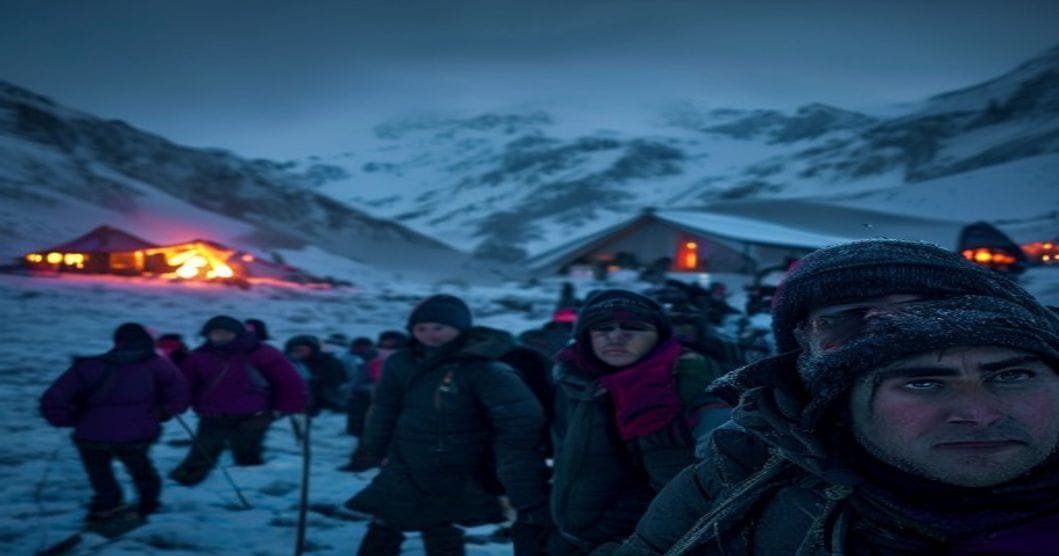
The serene and ecologically fragile region of Ladakh has once again become the focal point of a significant environmental and political movement. At its heart lies the Sonam Wangchuk hunger strike, a powerful act of protest spearheaded by the renowned innovator, education reformist, and climate activist, Sonam Wangchuk. This indefinite hunger strike, drawing national and international attention, seeks to secure crucial constitutional safeguards for Ladakh’s delicate ecosystem and its indigenous communities. Wangchuk’s commitment to this cause underscores the urgent need for comprehensive protection of the Himalayan region.
His protest centers on two primary demands: the implementation of the Sixth Schedule of the Indian Constitution for Ladakh and the granting of statehood to the Union Territory. These demands are not merely political aspirations; they are deeply rooted in the ecological vulnerabilities and cultural distinctiveness of the region. Furthermore, the ongoing Sonam Wangchuk hunger strike has sparked broader conversations about environmental governance, local autonomy, and the rights of indigenous populations in a rapidly changing climate.
Who is Sonam Wangchuk? The Visionary Behind the Movement
Sonam Wangchuk is a name synonymous with innovation and environmental advocacy in India. Born in Uleytokpo, Ladakh, his journey has been marked by a relentless pursuit of practical solutions to complex problems. He gained widespread recognition for establishing the Students’ Educational and Cultural Movement of Ladakh (SECMOL) in 1988. This pioneering institution transformed education in the region, focusing on experiential learning and local relevance. His work has inspired countless individuals.
Moreover, Wangchuk’s innovative spirit extended to environmental conservation. He is perhaps best known globally for the ‘Ice Stupa’ project. This ingenious technique creates artificial glaciers to store winter water, which then melts during the dry spring season. This provides a crucial water source for local agriculture. The Ice Stupas exemplify his blend of traditional wisdom with modern engineering. Consequently, these projects have provided vital support to communities facing water scarcity.
His dedication to Ladakh’s future is unwavering. For instance, he has consistently championed sustainable development practices that respect the region’s unique geographical and cultural identity. The current Sonam Wangchuk hunger strike is a natural extension of his lifelong commitment. It highlights his readiness to take extreme measures to protect his homeland. This long-standing commitment underscores the seriousness of the present situation.
Understanding Ladakh’s Unique Vulnerability: Why Protection is Paramount
Ladakh, often referred to as ‘The Land of High Passes,’ is a cold desert region nestled in the Himalayas. Its breathtaking landscapes are matched only by its extreme environmental fragility. The region’s ecosystem is highly sensitive to external pressures, especially those related to climate change and unregulated development. Consequently, a slight imbalance can have devastating effects on its biodiversity and natural resources.
The primary source of water in Ladakh is glacial melt. However, global warming is causing glaciers to recede at an alarming rate. This poses an existential threat to the region’s agricultural practices and the livelihoods of its inhabitants. Furthermore, the delicate balance of its high-altitude desert ecology is easily disrupted by increased human activity. This includes tourism and infrastructural projects. Therefore, protective measures are incredibly urgent.
Ladakh’s indigenous communities have lived in harmony with this harsh environment for centuries. Their traditional knowledge and practices are crucial for sustainable living in the region. However, modern development models, if unchecked, can easily erode these sustainable ways of life. Therefore, safeguarding Ladakh is not just an environmental issue; it is a matter of cultural preservation and human rights. The current Sonam Wangchuk hunger strike brings these critical issues to the forefront.
The Sixth Schedule: A Shield for Ladakh’s Future
One of the central demands of the Sonam Wangchuk hunger strike is the inclusion of Ladakh under the Sixth Schedule of the Indian Constitution. This provision offers significant autonomy and protection to tribal-majority areas, primarily in the northeastern states. It establishes Autonomous District Councils (ADCs) and Regional Councils, which have powers over land, forest management, water, agriculture, and local customs. This framework allows for self-governance tailored to indigenous needs.
For Ladakh, inclusion under the Sixth Schedule would mean greater control over its land, resources, and cultural identity. It would empower local communities to make decisions regarding their development trajectory. This would prevent external exploitation and preserve the region’s unique heritage. Crucially, it would provide a legal framework to regulate mining, tourism, and other industrial activities. This regulation is essential for sustainable growth. Without this protection, Ladakh remains vulnerable to unchecked exploitation.
Critics argue that without such safeguards, the region’s fragile ecosystem and distinct culture are at severe risk. The current status as a Union Territory, directly administered by the central government, offers less protection compared to the Sixth Schedule. Therefore, local voices believe this constitutional provision is vital. It represents a promise of self-determination and environmental stewardship for Ladakh. This demand is a cornerstone of Wangchuk’s protest.
Demand for Statehood: Autonomy and Self-Determination
In addition to the Sixth Schedule, statehood for Ladakh is another pivotal demand driving the Sonam Wangchuk hunger strike. Prior to 2019, Ladakh was part of the erstwhile state of Jammu and Kashmir. The reorganization of Jammu and Kashmir into two Union Territories—Jammu and Kashmir, and Ladakh—sparked mixed reactions. While some welcomed the separation from Kashmir, concerns quickly arose regarding Ladakh’s administrative future and lack of elected representation.
Granting statehood would provide Ladakh with its own legislative assembly and an elected government. This would ensure that decisions concerning the region are made by local representatives, accountable to the people of Ladakh. Currently, as a Union Territory, many critical decisions are made by the central government, often without sufficient local input. Consequently, this can lead to policies that do not fully align with the specific needs and aspirations of the Ladakhi people.
Statehood would foster a greater sense of self-determination and political empowerment. It would allow Ladakh to chart its own course for development, balancing economic growth with environmental conservation. This autonomy is crucial for a region with such unique geographical and cultural characteristics. Therefore, the demand for statehood is not just about administrative status; it is about ensuring a democratic and sustainable future for Ladakh. This deep aspiration drives much of the public support.
The Genesis of the Sonam Wangchuk Hunger Strike: A Timeline
The journey leading to the Sonam Wangchuk hunger strike has been a gradual escalation of concerns and peaceful protests. For years, activists and local leaders in Ladakh have voiced their anxieties about the region’s future. They consistently highlighted the potential threats posed by industrialization, uncontrolled tourism, and climate change. These concerns were amplified after Ladakh became a Union Territory. Many felt that their voices were not being adequately heard.
Initial protests and dialogues involved various Ladakhi organizations. They formed a united front to press for their demands. Several delegations met with central government officials, presenting their arguments for the Sixth Schedule and statehood. However, progress on these fronts remained slow. The lack of concrete action from the government fueled growing frustration among the populace. This inaction compelled leaders to consider more drastic measures.
Sonam Wangchuk, known for his commitment to non-violent resistance, had previously undertaken shorter fasts to draw attention to these issues. These earlier protests served as a prelude to the current indefinite hunger strike. Each step underscored the community’s unwavering resolve. The failure of repeated pleas and discussions to yield tangible results ultimately pushed Wangchuk towards this ultimate form of peaceful protest. He saw it as the only remaining option to highlight the urgency of the situation.
Key Developments in the Sonam Wangchuk Hunger Strike
The recent phases of the Sonam Wangchuk hunger strike have seen several significant developments, keeping the issue in the national spotlight. The strike intensified when news broke of Wangchuk’s wife requesting his transfer from Safdarjung Hospital. This request implies concerns about his well-being and the circumstances of his detention or medical care. His health has become a major point of public concern. Therefore, his family’s actions reflect this worry.
Adding to the momentum, another activist named Dipke also began an indefinite hunger strike at Jantar Mantar. Dipke’s action signals a growing solidarity and a collective commitment to the cause. It demonstrates that the movement is not solely dependent on one individual. Instead, it reflects a broader societal demand. This parallel strike amplifies the call for action from the government.
Furthermore, reports emerged detailing Wangchuk’s removal from the protest site at Jantar Mantar. NDTV’s ‘Reporter’s Diary’ covered the incident, raising questions about the authorities’ handling of peaceful dissent. The Congress party swiftly accused the government of
For more real-time news updates and announcements, visit our homepage.