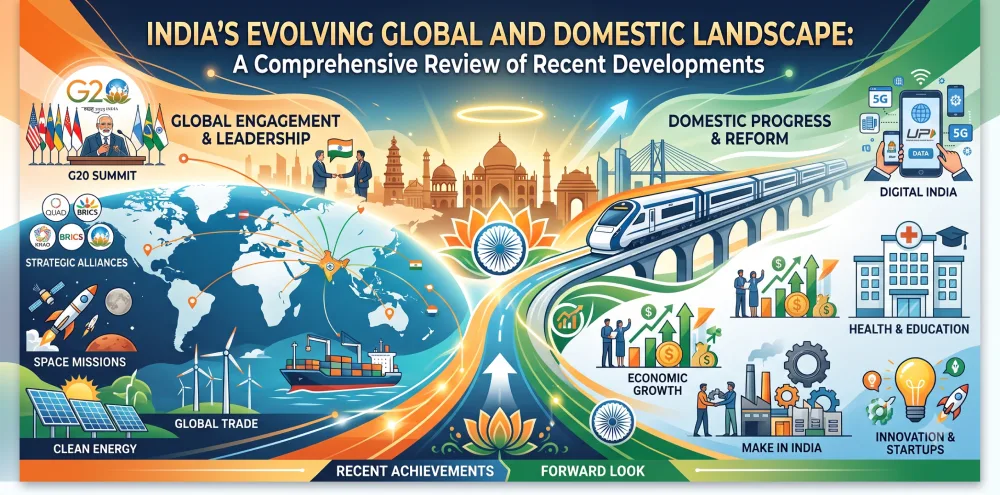
India today stands at a fascinating juncture. The nation navigates a complex tapestry of international relations, domestic policy shifts, and significant social challenges. This comprehensive review delves into various recent updates, providing a nuanced understanding of **India’s Evolving Global and Domestic Landscape**. From bolstering strategic partnerships to addressing internal policy debates and confronting social issues, India’s journey is multifaceted. Each development contributes to the intricate narrative of a rapidly developing nation. Consequently, understanding these events offers crucial insights into its trajectory.
Geopolitical Partnerships and Energy Security: Shaping India’s Global Role
India’s proactive foreign policy has significantly strengthened its strategic alliances. These partnerships are crucial for energy security and regional influence. Recently, a major development underscored this approach. Furthermore, ongoing international tensions continue to shape India’s strategic considerations.
Australia-India Uranium Deal: A Landmark in Bilateral Relations
A significant event during Prime Minister Modi’s visit to Australia marked a new chapter in bilateral relations. India and Australia struck a landmark deal on uranium exports. This agreement is particularly noteworthy for several reasons. It signifies a deeper trust and strategic alignment between the two Indo-Pacific democracies. Moreover, it addresses India’s growing energy requirements.
The historical context of nuclear cooperation between India and various international partners is important here. For decades, India operated outside the Non-Proliferation Treaty (NPT). This status often limited its access to nuclear fuel and technology. However, a civilian nuclear deal with the United States in 2008 paved the way for broader international nuclear cooperation. Subsequently, this opened doors for agreements with other nuclear-supplying countries. The agreement with Australia falls into this category.
The significance for India’s energy needs cannot be overstated. India is a rapidly industrializing nation. Therefore, it faces an ever-increasing demand for electricity. Nuclear power offers a clean and reliable source of energy. It helps diversify India’s energy mix. This reduces reliance on fossil fuels, which carry both environmental and economic costs. Consequently, securing a stable supply of uranium is vital for India’s ambitious nuclear power expansion plans. The deal provides access to Australia’s vast uranium reserves. This ensures long-term fuel security for India’s civilian nuclear reactors.
Beyond energy, the deal carries broader implications for the Indo-Pacific strategy. Both India and Australia are key players in the region. They share concerns about maritime security and regional stability. Deepening ties across nuclear, maritime, and mineral sectors enhances their collective influence. It also sends a strong signal about their commitment to a free and open Indo-Pacific. This partnership fosters greater strategic convergence. Moreover, it supports a rules-based international order.
The economic benefits for both nations are substantial. Australia, as a major uranium producer, gains a significant market for its exports. India secures a critical resource for its energy future. The deal is expected to foster further collaboration in related fields. This includes technology transfer and joint research. Specifically, it can spur growth in mining and energy sectors. Additionally, it strengthens overall trade relations.
The specifics of the deal involve stringent safeguards. These ensure that the uranium supplied is used exclusively for peaceful civilian purposes. India has demonstrated a robust commitment to its international nuclear obligations. This adherence was crucial in gaining Australia’s confidence. The agreement includes mechanisms for verification and monitoring. Therefore, it aligns with international non-proliferation norms. Looking ahead, this partnership is poised to grow further. It represents a cornerstone of their evolving strategic relationship. Indeed, it underpins India’s journey towards greater energy independence.
Iran-US Tensions and Regional Impact: A Volatile Geopolitical Landscape
The global geopolitical landscape remains volatile. Recent events in the Gulf region highlight this instability. Iran announced that it hit US military targets in the Gulf. This occurred amidst the laying to rest of a slain Iranian leader. This series of events represents a significant escalation of long-standing tensions.
The historical animosity between the United States and Iran is deep-rooted. It dates back decades. Key events include the 1979 Iranian Revolution and the subsequent hostage crisis. More recently, disagreements over Iran’s nuclear program and its regional activities have fueled distrust. The withdrawal of the U.S. from the Joint Comprehensive Plan of Action (JCPOA), or the Iran nuclear deal, intensified these frictions. Consequently, sanctions were reimposed, further exacerbating economic pressure on Iran.
The specific incidents leading to these recent strikes were a complex chain of events. U.S. strikes preceded Iran’s retaliatory actions. These earlier U.S. strikes were in response to attacks on American personnel and assets in the region. Such tit-for-tat exchanges risk a wider regional conflict. Indeed, the situation demands careful diplomatic handling.
The geopolitical ramifications for the Gulf region are profound. The Gulf is a vital artery for global oil supplies. Therefore, any disruption there sends ripples through international markets. Oil prices typically jump in response to such instability. This impacts economies worldwide. Furthermore, regional allies of the U.S., such as Saudi Arabia and the UAE, become particularly vulnerable. The security of international shipping lanes, like the Strait of Hormuz, is also jeopardized.
International responses have largely called for de-escalation. World leaders and organizations urge restraint from all parties. They emphasize the importance of diplomatic solutions. The potential for miscalculation in such a tense environment is very high. Therefore, communication channels are critical.
Amidst these tensions, Iran also focused on its internal affairs. The country prepared to bury its slain Supreme Leader. This event culminated in a mass funeral. The legacy of such a leader is often complex. It divides public opinion both internally and internationally. The funeral provided a moment for national mourning. It also served as a demonstration of state power and public support. However, it concurrently highlighted a bitterly divided Iran grappling with his legacy. The succession process and future direction of the country become critical points of observation.
India has a significant stake in the stability of the Gulf region. This is due to several factors. Firstly, India imports a substantial portion of its energy, especially oil, from the Gulf. Disruptions can severely impact its economy. Secondly, a large Indian diaspora resides and works in these countries. Their safety and well-being are paramount. Thirdly, India maintains diplomatic relations with various regional players. It often balances these relationships carefully. Therefore, any escalation of conflict poses direct challenges to India’s economic and strategic interests. It necessitates vigilant monitoring and cautious diplomatic engagement. The situation remains highly fluid. Its implications for global security are far-reaching.
| Key Geopolitical Developments | Impact on India | Global Significance |
|---|---|---|
| Australia-India Uranium Deal | Enhanced energy security, strategic partnership in Indo-Pacific | Model for South-South cooperation, nuclear non-proliferation within safeguards |
| Iran-US Military Exchanges | Concerns over oil prices, diaspora safety, regional stability | Risk of wider conflict, impact on global energy markets |
Domestic Policy Shifts and Public Reactions: Navigating Internal Challenges
Domestically, India is introducing significant policy changes. These aim to address various national priorities. However, such reforms often meet with public reactions. Both support and opposition emerge. Consequently, these responses shape the implementation and long-term success of policies.
India’s Biofuel Push (E20) and Public Discontent: Balancing Progress with Practicality
India has embarked on an ambitious program. It is adding biofuels to petrol. This initiative aims to blend ethanol, specifically targeting E20 (20% ethanol, 80% petrol). The government’s rationale behind this push is multifaceted. Firstly, it seeks environmental benefits. Ethanol is considered a cleaner-burning fuel. It can help reduce tailpipe emissions. This contributes to better air quality. Secondly, it aims to reduce India’s import dependency on crude oil. This has significant economic advantages. A lower import bill strengthens the national economy. Thirdly, it supports farmers. Ethanol is primarily produced from agricultural feedstocks like sugarcane and maize. Increased demand boosts farmer income. Therefore, this policy has wide-ranging potential benefits.
Despite these objectives, many drivers are unhappy. Public discontent has emerged regarding the E20 rollout. Primary concerns revolve around several key issues. Many drivers fear a drop in mileage. Ethanol has a lower energy density than petrol. Consequently, vehicles running on E20 might consume more fuel to cover the same distance. This directly impacts household budgets. Furthermore, there are worries about potential engine damage. Older vehicles, especially those not designed for higher ethanol blends, may experience issues. Components like rubber and plastic parts can degrade over time. This leads to higher maintenance costs.
The automotive industry has also weighed in. While newer vehicles are being manufactured as E20 compliant, a significant portion of the existing fleet is not. This poses a challenge for consumers. Modifications might be necessary for older cars. This adds an additional burden. Transport Minister Nitin Gadkari has attempted to allay some of these fears. He stated that E20 may only marginally hurt mileage. He also described claims of vehicle damage as “overblown.” However, public apprehension persists. Protesters, for example, have offered to present multiple “ethanol victims” to Gadkari, challenging his assertions.
The broader strategy for renewable energy and energy independence remains crucial. India aims to achieve E20 blending nationwide by 2025. This forms a part of its larger commitment to reducing carbon emissions. It also aligns with global climate goals. However, the current resistance highlights a common challenge. Introducing new policies often requires careful public education. It also demands addressing practical concerns of citizens. Balancing ambitious environmental goals with everyday consumer experiences is key to successful implementation. The economic impact on consumers, particularly regarding fuel prices and potential vehicle repairs, needs careful consideration. Opposition leaders like Arvind Kejriwal have also criticized the government. They allege that oil companies are making “illegitimate profit” from fuel prices. This further complicates the narrative.
The transition to E20 is a significant policy experiment. It tests the government’s ability to manage large-scale behavioral and technological shifts. The outcome will have lasting implications. It affects India’s energy future and its environmental commitments.
Local Governance and Public Grievances: Challenges at the Grassroots
Issues at the local level often highlight deeper systemic challenges. Recent incidents reveal breakdowns in governance and public trust. These events underscore the need for accountability and citizen protection.
Thane Doctor Assault Case: A Crisis of Safety for Healthcare Professionals
A deeply disturbing incident recently unfolded in Thane. A doctor was assaulted by a Shiv Sena corporator, Ramesh Mhatre. The incident was widely reported. Subsequently, a video went viral, showing the assault. This act of violence sparked outrage. It highlighted the vulnerability of healthcare professionals. The assaulted doctor, along with a colleague, consequently quit their jobs. They cited fear as the primary reason for their departure. The doctor explicitly stated, “Will never go back,” leaving Thane. This indicates a profound loss of faith in the system.
The impact on healthcare professionals is immense. Such incidents erode morale. They also create an atmosphere of fear. Doctors and medical staff often work under stressful conditions. They deserve a safe working environment. Assaults on medical personnel are unfortunately not new in India. However, an assault by a public representative adds another layer of concern. It signals a potential breakdown in respect for institutions and professionals.
Political response to the incident was swift, at least publicly. Eknath Shinde, a prominent political figure, reportedly reprimanded the Sena corporator. Ramesh Mhatre was subsequently arrested. This swift action demonstrated a recognition of the seriousness of the crime. However, the incident also raised broader questions. These relate to impunity and political interference in local administration. Public outrage demanded swift justice. Many called for stronger measures to protect medical professionals. This case underscores the urgent need for robust legal protections. It also highlights the importance of fostering a culture of respect for healthcare workers.
Bengaluru Street Vendor Protests: The Struggle for Livelihood and Urban Space
Bengaluru, a bustling metropolitan city, recently witnessed significant protests. Street vendors rallied against an eviction drive. This drive was part of the “Safe Footpath Campaign.” The protests included a city-wide bandh. This collective action aimed to draw attention to their plight.
The grievances of the street vendors are substantial. Eviction drives threaten their livelihoods. Many informal economy workers depend solely on street vending for income. The lack of alternative, designated spaces forces them into precarious situations. They often face arbitrary enforcement actions by authorities. This leads to confiscation of goods and fines.
The issue highlights a fundamental tension. It is the conflict between urban planning and the informal economy. City administrations often prioritize pedestrian safety and decongestion. They launch campaigns like the “Safe Footpath Campaign.” However, these campaigns often overlook the social and economic realities of street vendors. These vendors are an integral part of urban life. They provide affordable goods and services to millions.
The role of local authorities, such as the Bengaluru City Corporation (MCC), is critical. There have been allegations of vendors being asked to pay money to fight eviction. This points to potential corruption and exploitation. Figures like Arun Pai, often dubbed the “footpath mayor,” combine civic action with advocacy. They work to find balanced solutions. However, widespread protests indicate that these efforts are often insufficient.
The impact on the urban poor and small businesses is devastating. Eviction can lead to loss of income, increased debt, and displacement. It exacerbates existing inequalities. The call for a bandh represented a powerful collective action. It showed the vendors’ determination to protect their rights.
Possible solutions involve a more inclusive approach. Designated vending zones could be established. A transparent licensing system could regulate street vending. This would provide vendors with legal recognition and security. It would also allow for better management of urban spaces. The social and economic implications for a major city like Bengaluru are significant. A thriving informal sector contributes to the city’s dynamism. Therefore, finding equitable solutions is essential. This protects the livelihoods of countless citizens. It also ensures the city’s economic vibrancy.
| Domestic Challenge | Key Issues | Public/Policy Response |
|---|---|---|
| E20 Biofuel Adoption | Mileage drop, engine damage fears, consumer costs | Government assurances, industry adaptation, consumer protests |
| Thane Doctor Assault | Doctor safety, political interference, fear among healthcare workers | Arrest of corporator, political reprimand, doctor resignations |
| Bengaluru Vendor Evictions | Loss of livelihood, informal economy rights, urban planning conflict | Protests, bandh, calls for designated vending zones |
Incidents of Concern and National Security: Vigilance and Justice Across India’s Evolving Global and Domestic Landscape
National security remains a paramount concern for any nation. Incidents ranging from military equipment failures to grave social crimes demand attention. These events reflect diverse aspects of **India’s Evolving Global and Domestic Landscape**. They underscore the constant need for vigilance, thorough investigation, and the pursuit of justice.
Indian Navy’s Drishti-10 UAV Crash: A Setback for Aerial Surveillance
A recent incident near Gujarat’s Porbandar involved the Indian Navy. Its Drishti-10 Uncrewed Aerial Vehicle (UAV) crashed. This occurrence happened during a training sortie. Fortunately, no loss of life was reported. However, an inquiry has been ordered into the mishap.
The Drishti-10 UAV is a variant of the Hermes-900 platform. It is an advanced reconnaissance drone. UAVs play a crucial role in modern military operations. They are vital for surveillance, reconnaissance, and intelligence gathering. The Indian Navy utilizes such drones for maritime domain awareness. This includes monitoring coastal areas and patrolling strategic waters. Therefore, a crash involving such an asset is a significant concern. It impacts operational readiness. It also raises questions about maintenance and training protocols.
This incident marks the second mishap involving a Hermes-900 platform. This fact intensifies the need for a thorough investigation. The inquiry will aim to determine the exact cause of the crash. Possible factors include mechanical failure, human error, or external influences. Understanding the root cause is essential. It prevents similar incidents in the future. It also ensures the safety and reliability of critical defense assets.
The importance of drone technology for national security cannot be overstated. UAVs provide a cost-effective and low-risk alternative to manned aircraft in many scenarios. They enhance situational awareness. They also extend the reach of surveillance capabilities. Any setback in this domain requires immediate attention. It necessitates robust corrective measures. The Navy’s rapid response in ordering an inquiry is a standard procedure. It reflects the seriousness with which such incidents are treated. The findings of this inquiry will be crucial. They will guide future procurement, maintenance, and training strategies for India’s growing drone fleet.
Tragic Incident: Indian Techie Murders Wife in US: A Call for Justice
A deeply tragic and disturbing case recently emerged from the United States. An Indian techie was arrested for the murder of his wife. The horrifying details of the crime sent shockwaves through the community. The accused allegedly killed his wife and then sent a photograph of her body to his lover in India. The victim had reportedly told him earlier that day that her “smoothie tasted like syrup,” suggesting a possible poisoning. This detail served as a chilling clue in the investigation.
This incident is a grim reminder of the pervasive issue of domestic violence. It transcends geographical and socio-economic boundaries. The case, involving an Indian couple living abroad, brought specific attention to the vulnerability of individuals in foreign lands. The fact that the accused sent a photo to a lover in India indicates a calculated and callous act. It further emphasizes the emotional and psychological complexities involved.
The legal process in the US will now unfold. This will involve investigation, charges, trial, and sentencing. Such cases often highlight the challenges of jurisdiction. They also touch upon international cooperation in law enforcement. The focus will be on ensuring justice for the victim. It also aims to hold the perpetrator accountable.
Beyond the legal aspects, this tragedy prompts reflection. It highlights societal issues such as infidelity, mental health, and the pressures within relationships. It underscores the critical need for support systems. These systems are vital for individuals facing relationship difficulties. They are also crucial for those experiencing domestic abuse. Raising awareness about domestic violence is paramount. It encourages victims to seek help. It also enables communities to intervene and prevent such horrific outcomes. The incident serves as a stark reminder of the dark side of human nature. It reinforces the urgent need for empathy, support, and justice in society.
- **UAV Crashes:** Highlight the importance of regular maintenance and advanced safety protocols for defense equipment.
- **Tragic Incidents:** Emphasize the critical role of support systems and mental health awareness in preventing domestic violence.
Conclusion: Navigating India’s Evolving Global and Domestic Landscape
In conclusion, **India’s Evolving Global and Domestic Landscape** is characterized by dynamic shifts and significant challenges. The recent uranium deal with Australia exemplifies India’s strategic foresight in international relations. It addresses critical energy needs. Conversely, the persistent tensions in the Gulf underscore the complexities of global geopolitics. They demand cautious diplomacy.
Domestically, the push for biofuels highlights India’s commitment to sustainable development. However, it also reveals the complexities of policy implementation and public acceptance. Issues like the assault on doctors and the plight of street vendors reveal the ongoing struggles at the grassroots level. They underscore the need for effective governance and social justice. Furthermore, incidents involving defense equipment and tragic social crimes remind us of the constant need for vigilance and accountability.
India continues its journey on the world stage. It simultaneously grapples with internal transformations. Each development, whether global or domestic, contributes to the nation’s unique narrative. These events shape its policies, influence its people, and define its path forward. Therefore, understanding this intricate interplay is crucial. It offers a complete picture of a nation striving for progress. India aims to achieve this progress while navigating a multifaceted world. The landscape is indeed evolving rapidly.
For more real-time news updates and announcements, visit our homepage.